Estúdio de Escultura 2025-26 • 2.º Semestre
1. Title:
Project 1 Title: Still Warm
2026
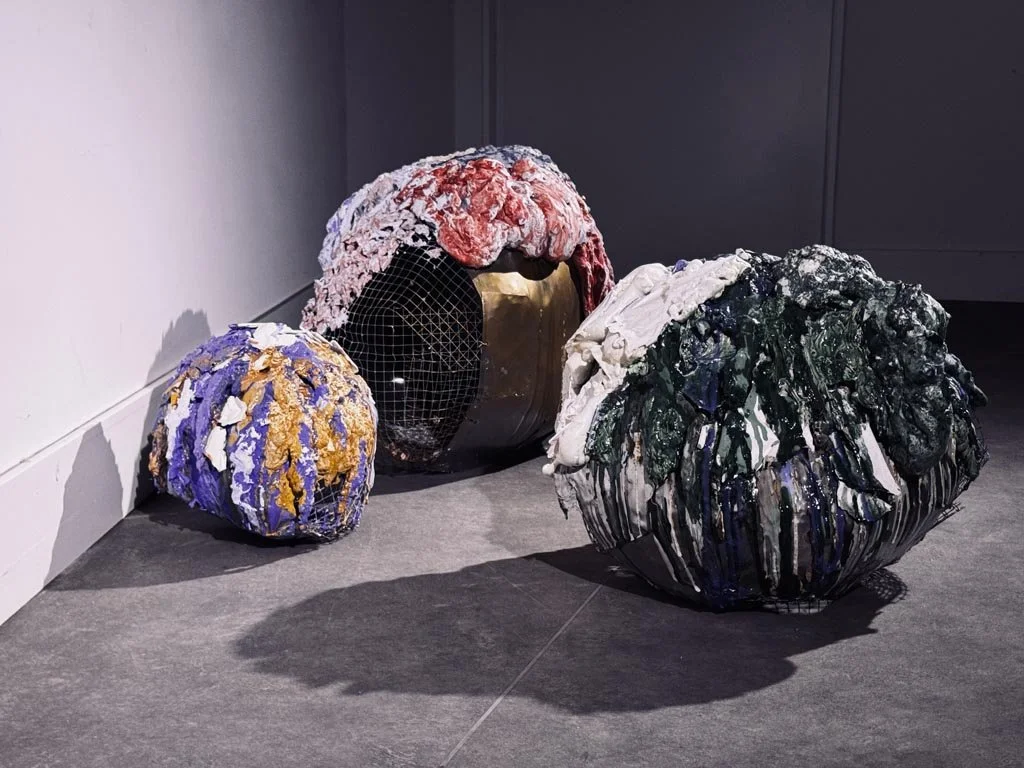
Carbon steel, stainless steel, aged zinc-coated steel mesh, plaster, concrete, resin, epoxy, polyurethane foam, pigment, iron oxide, aggregate
47 x 40 x 50cm, 38 x 38 x 34cm, 27 x 25 x 23 cm
Caption: On the weight of sustained presence
Project 2 Title: Since Fragile
2026
Cerâmica, mármore, aço inoxidável, arame, betão, gesso, silicone, poliuretano, pigmento de óxido de ferro, tinta acrílica com efeito espelhado
190 x 40 x 80 cm
2. Keywords:
Still Warm
Accumulation
Body
Deformation
Cellular
Geological
Pregnancy
Since Fragile
Emotional labor
Weight
Tilt
Breath
3. Description:
Still Warm
Materials: Carbon steel, stainless steel, aged zinc-coated steel mesh, plaster, concrete, resin, epoxy, polyurethane foam, pigment, iron oxide, aggregate
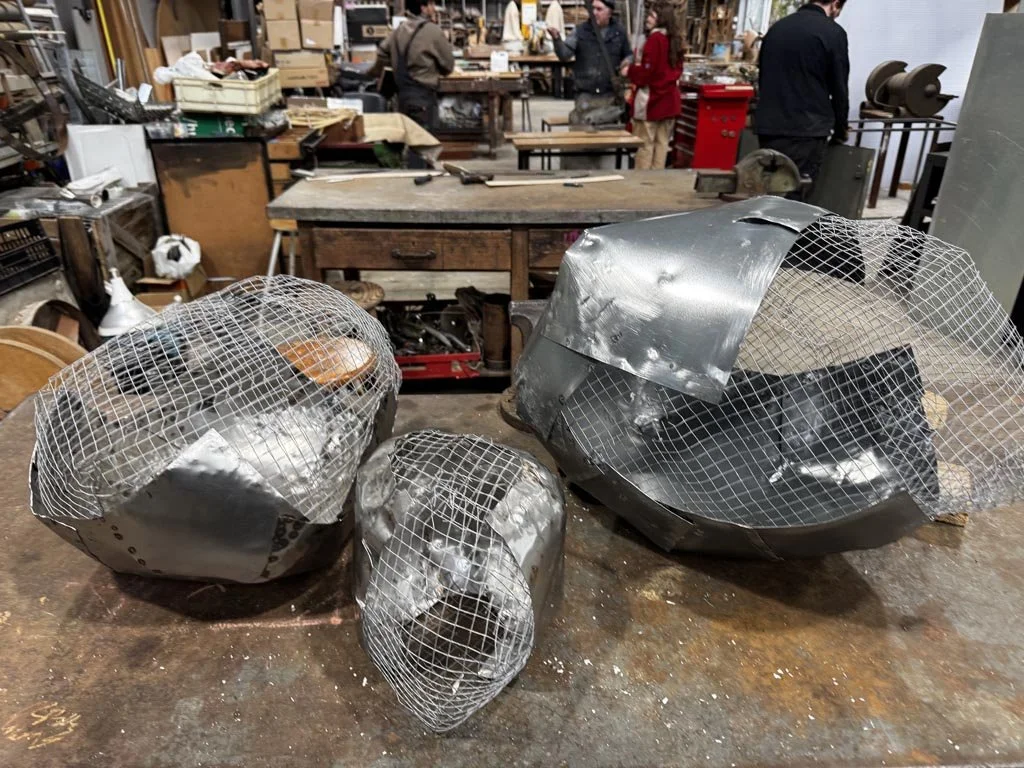
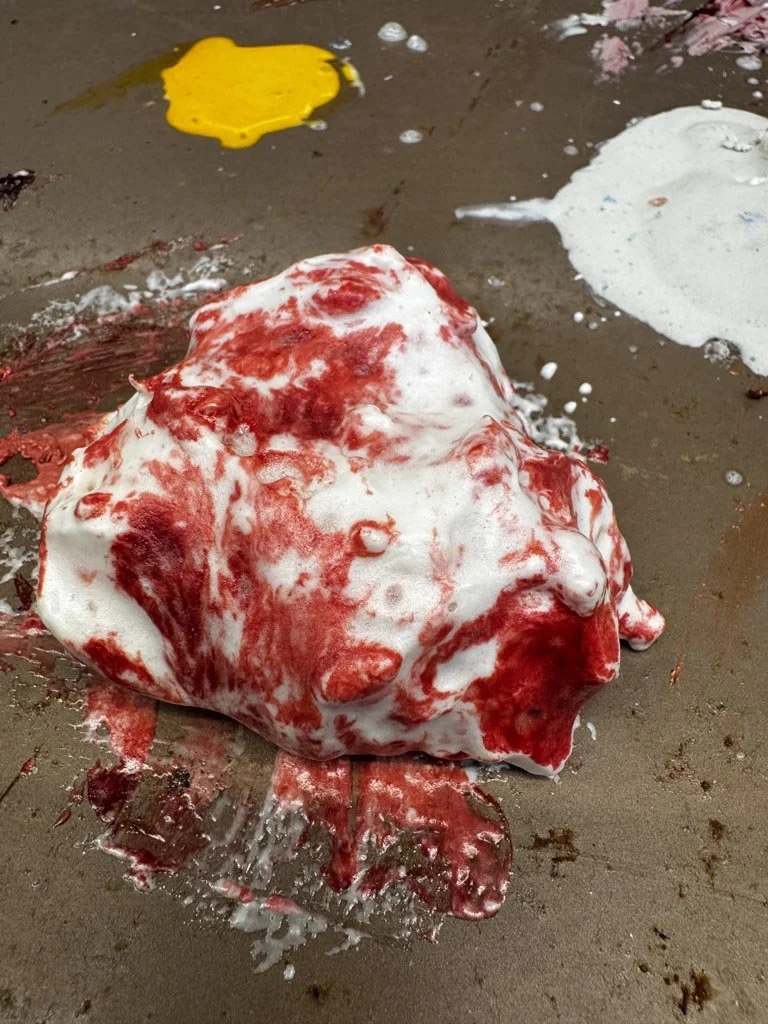
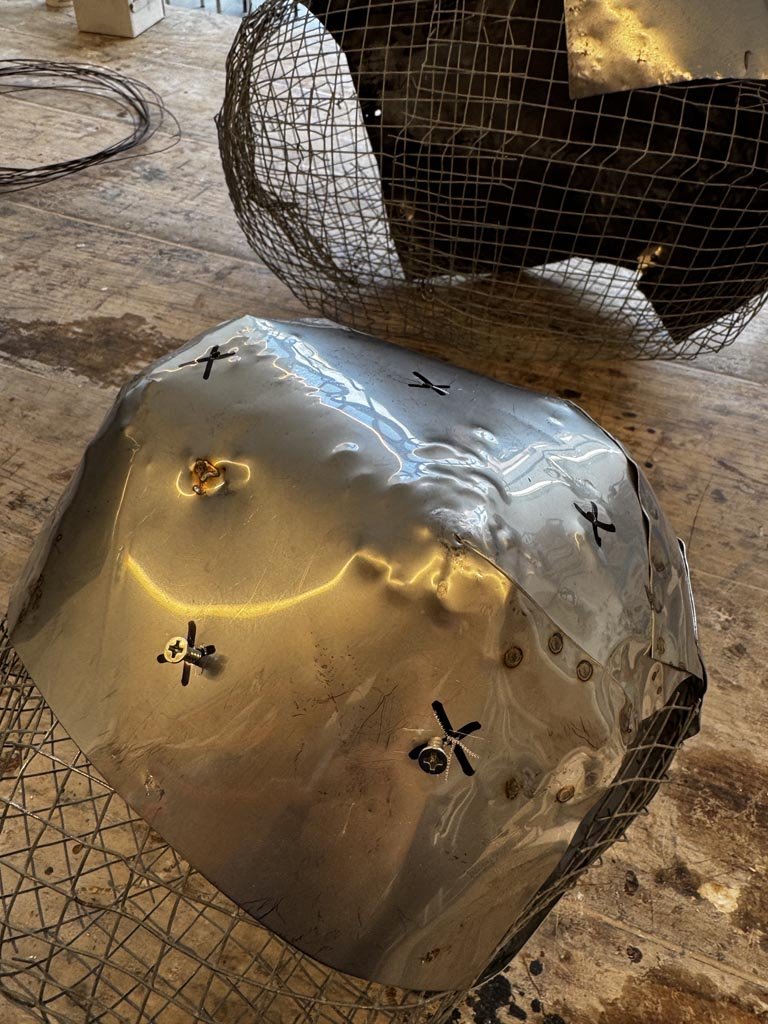
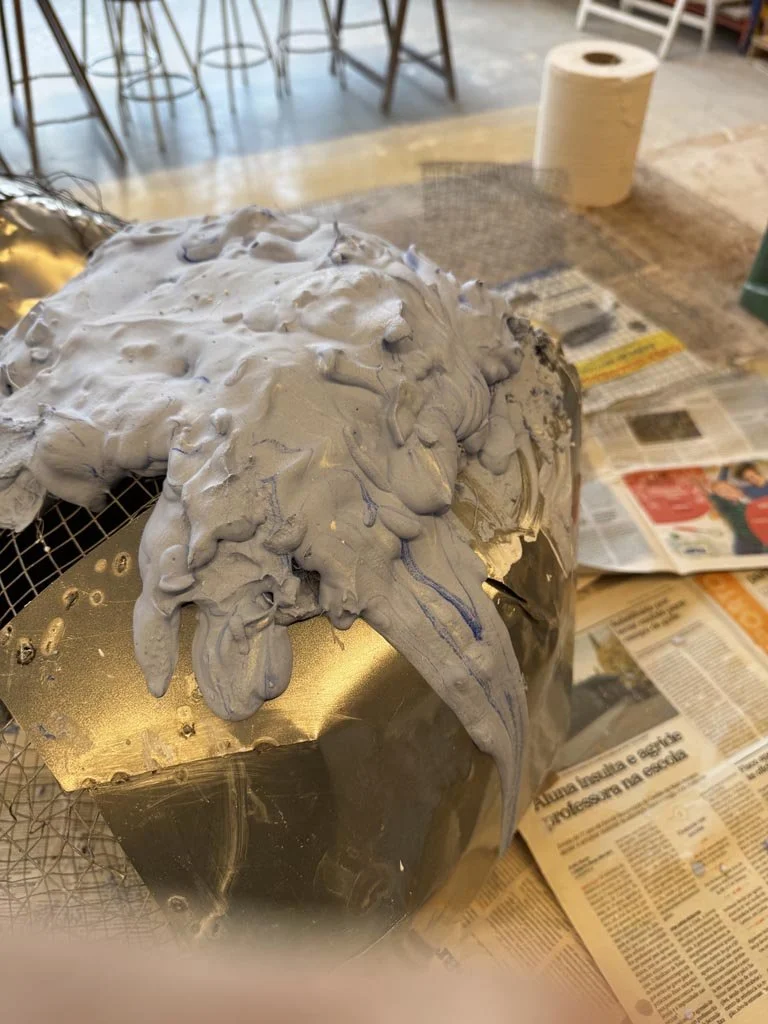
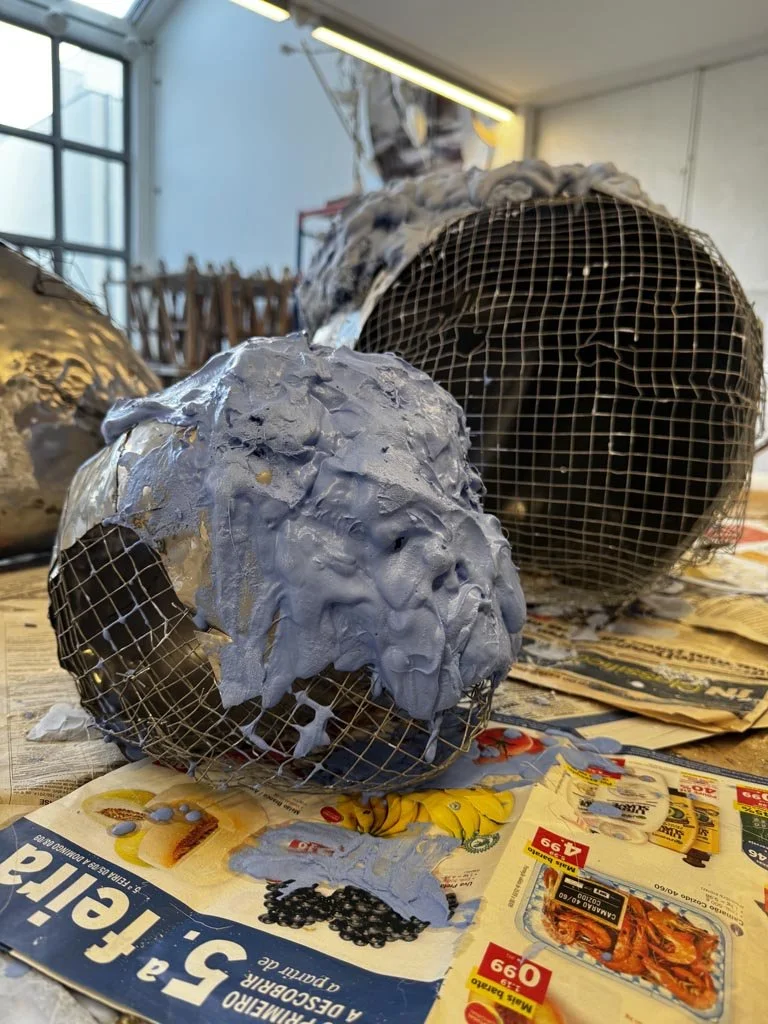
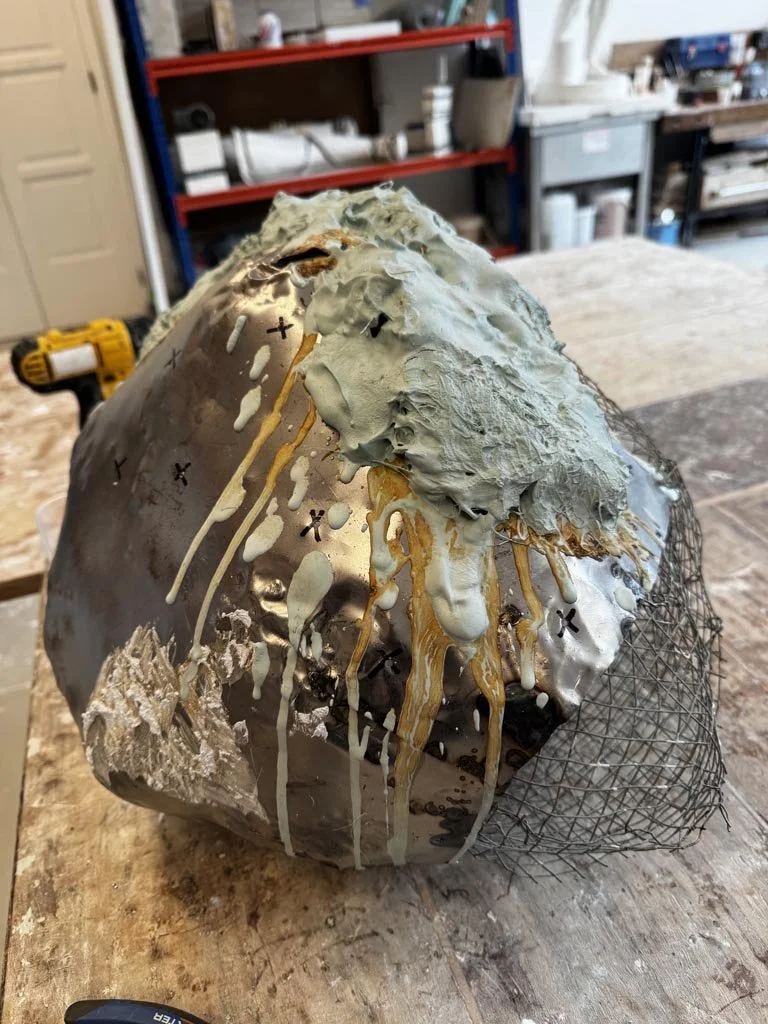
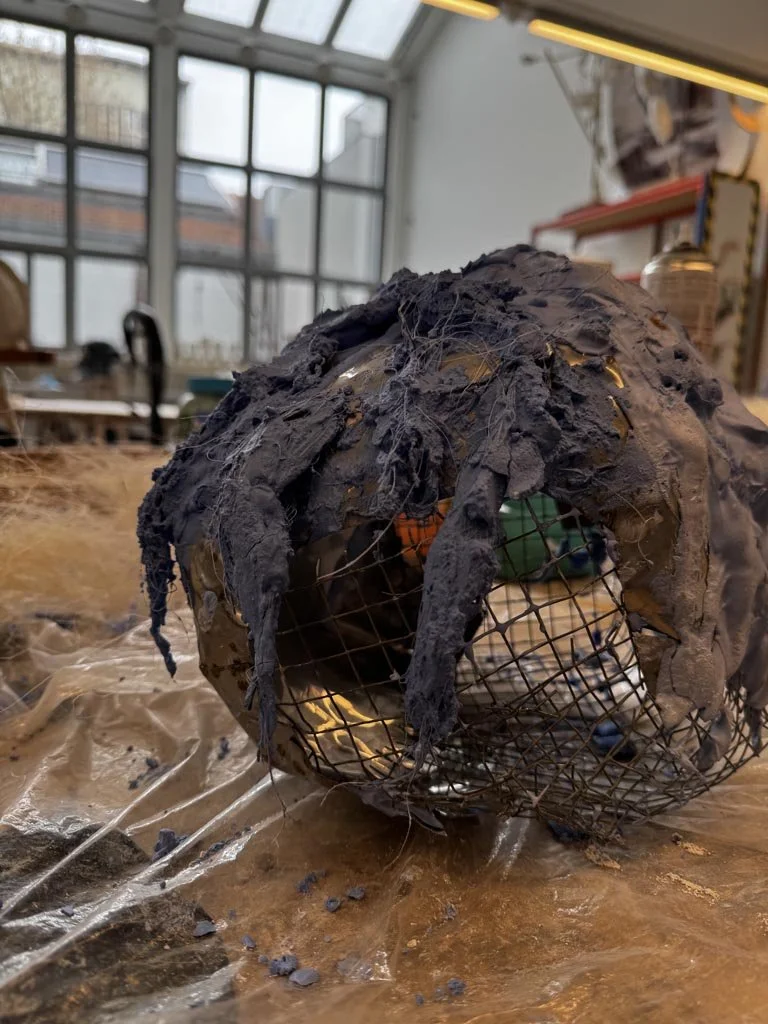
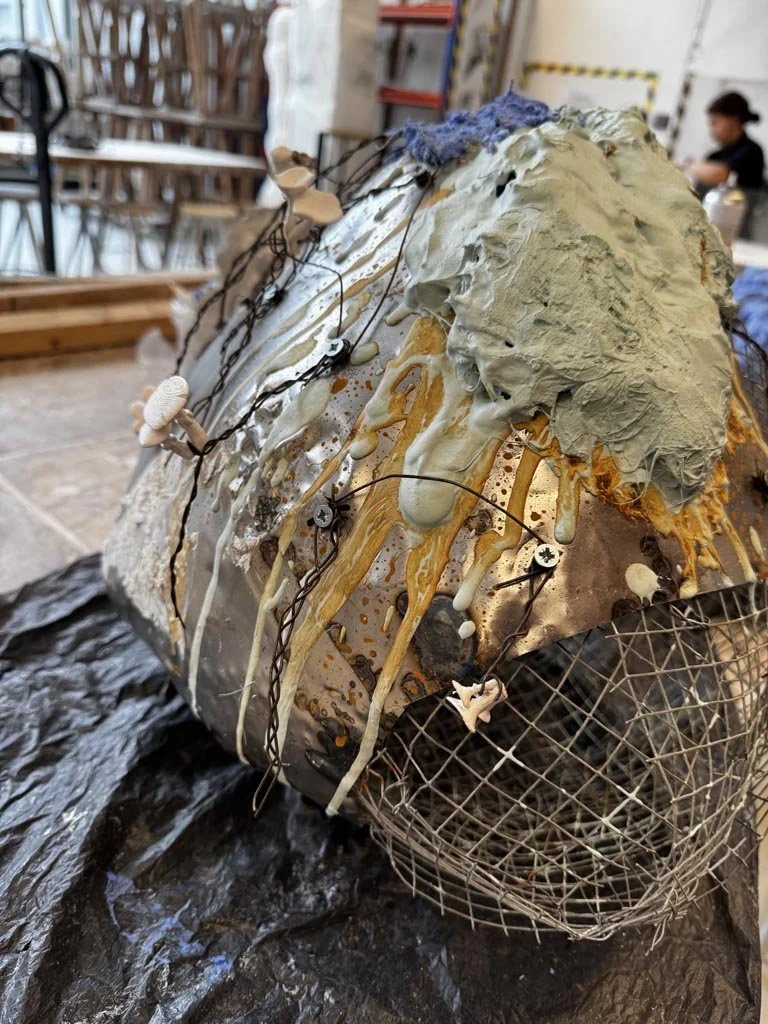
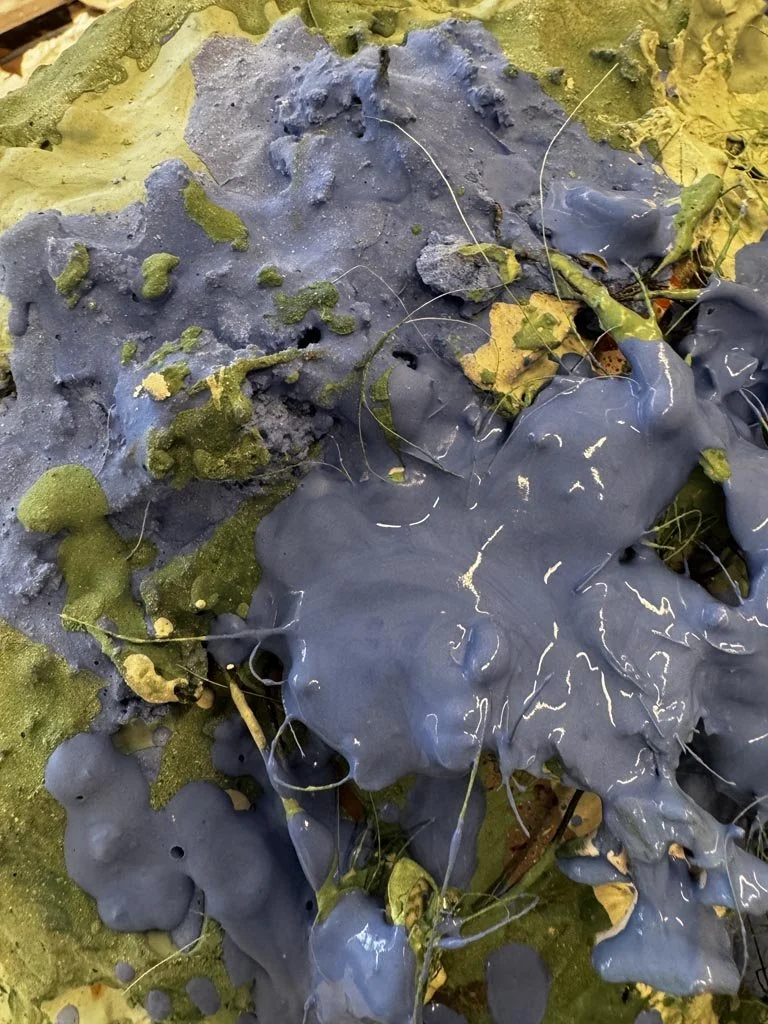
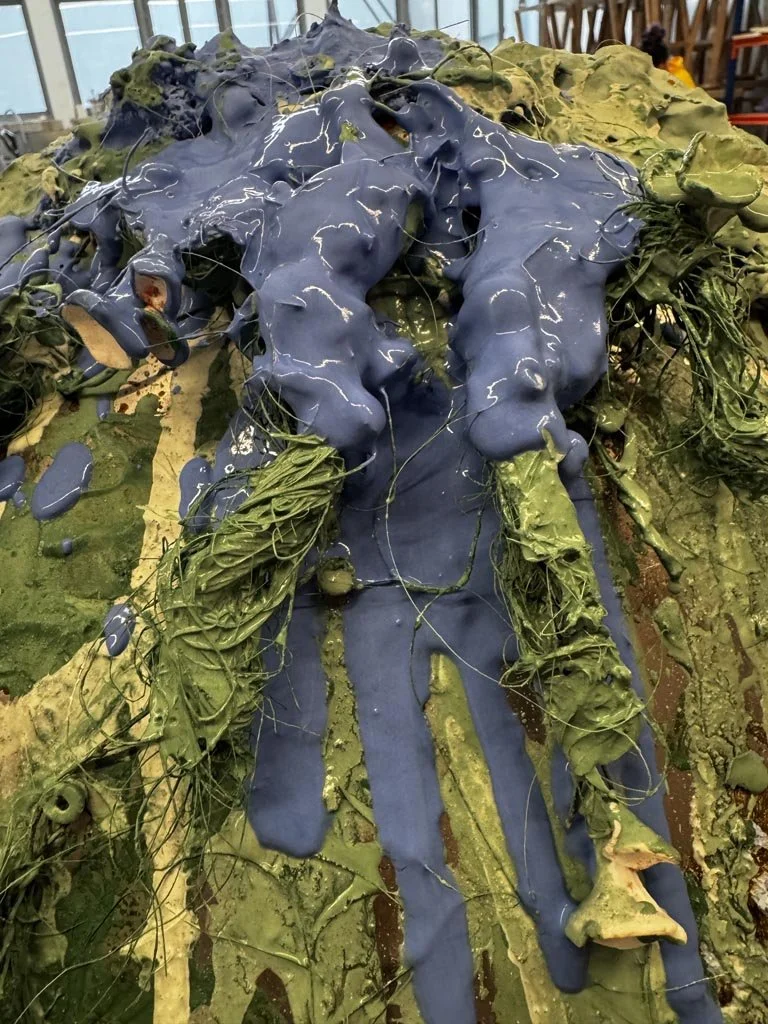
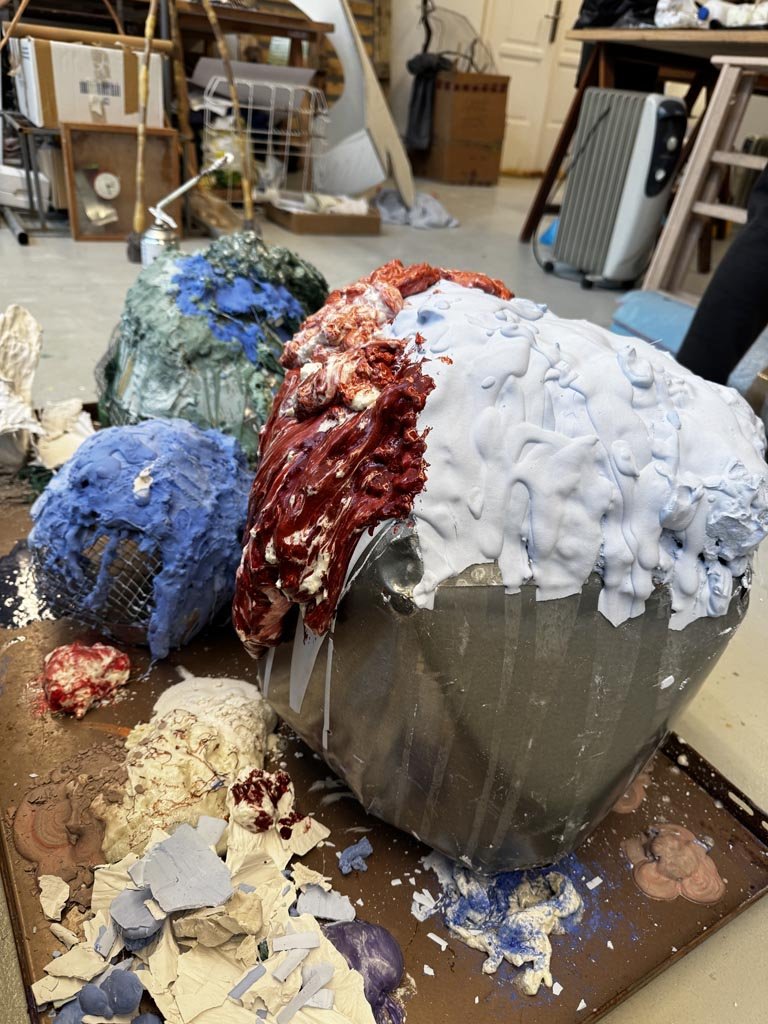
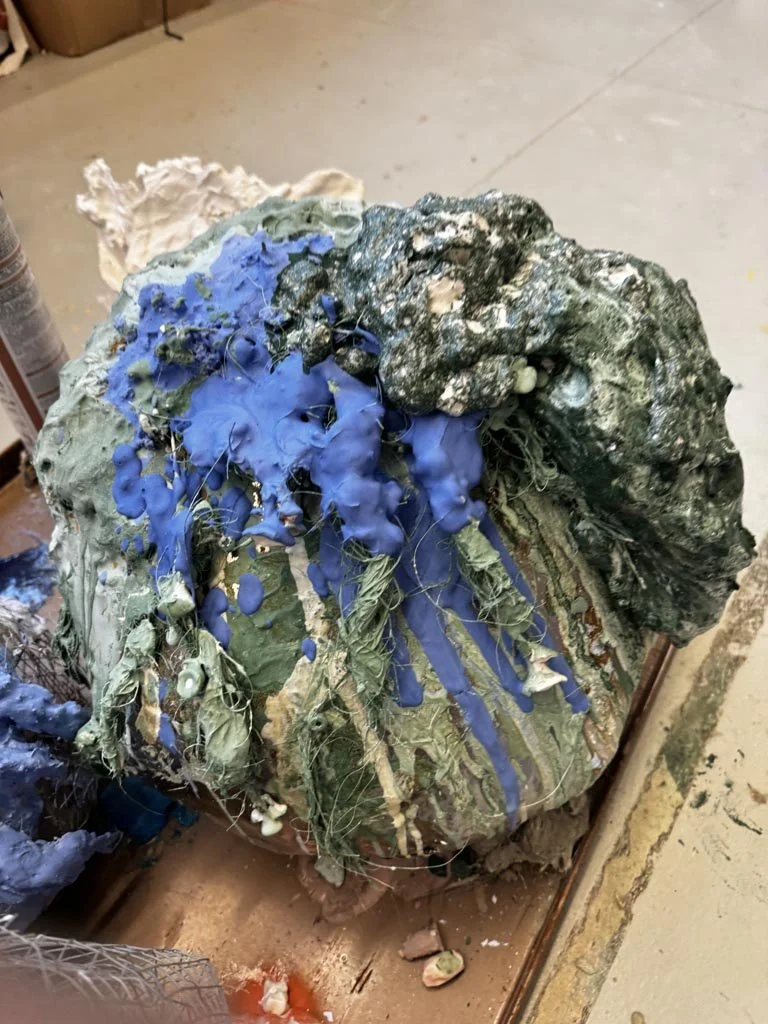
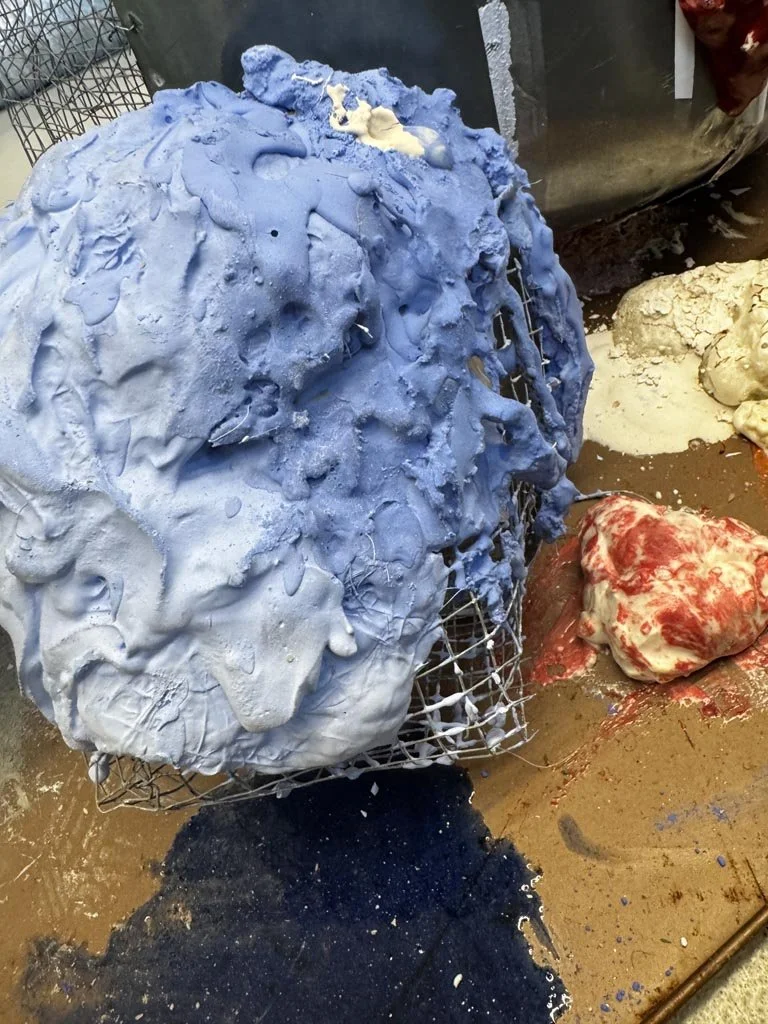
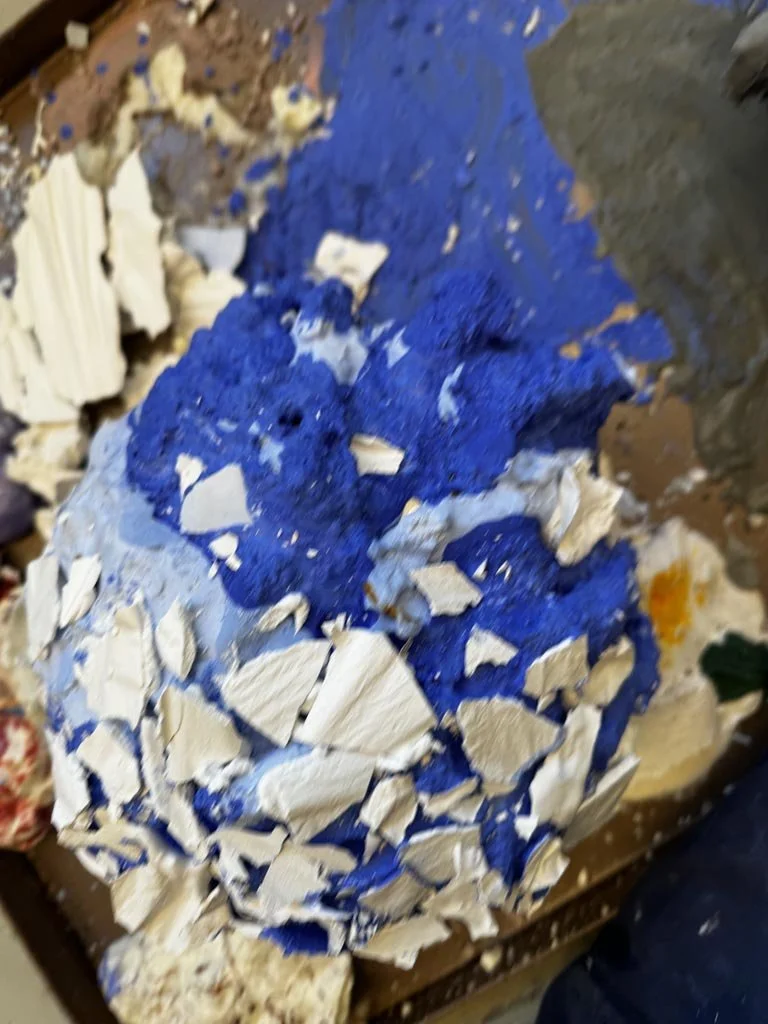
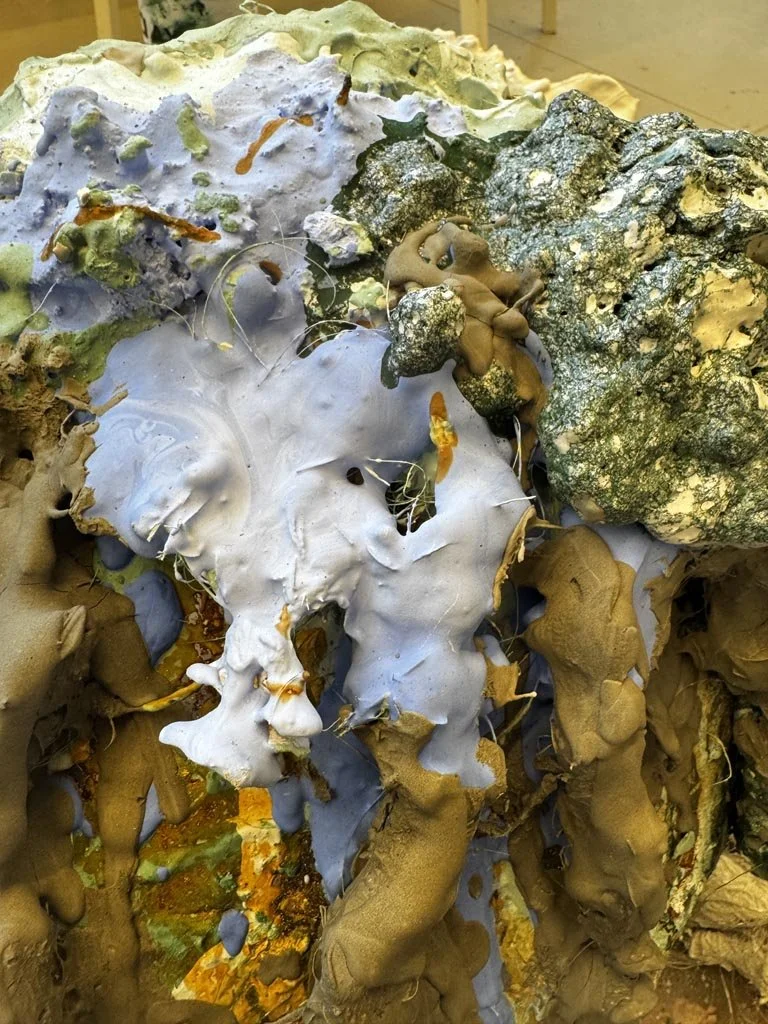
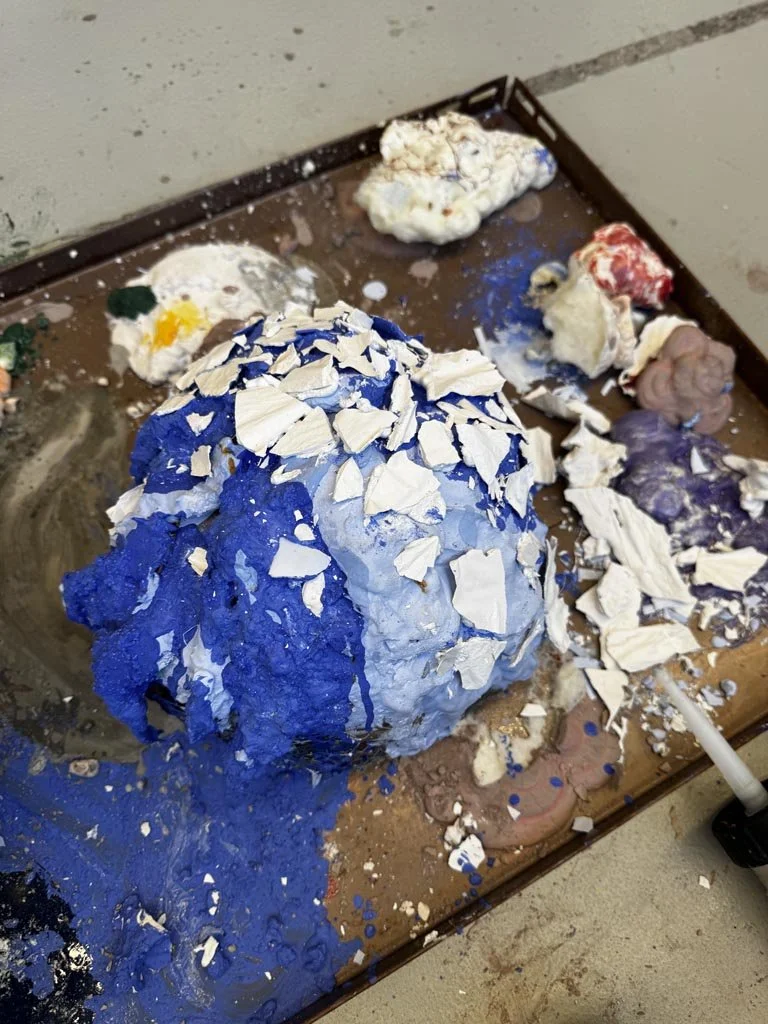
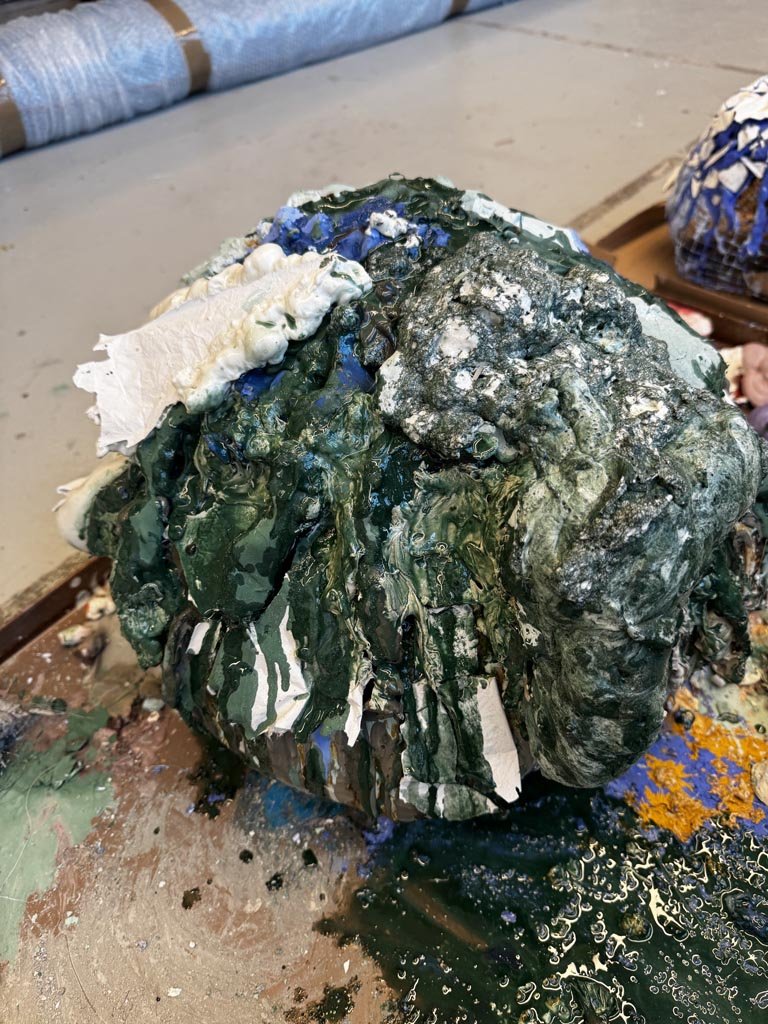
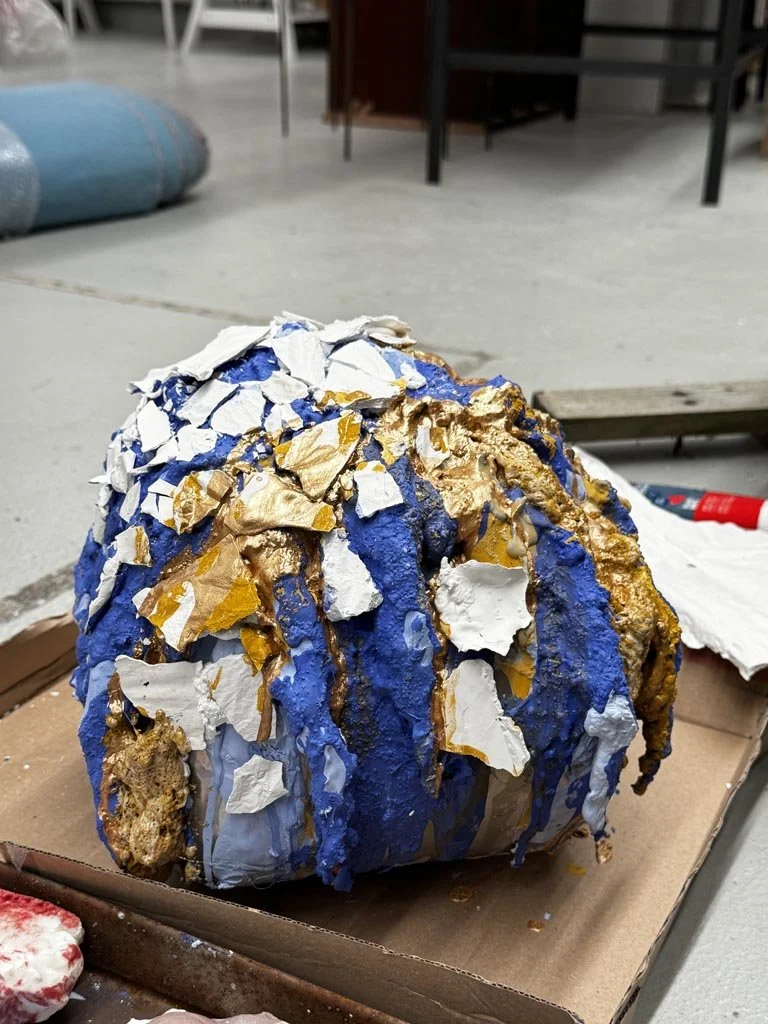
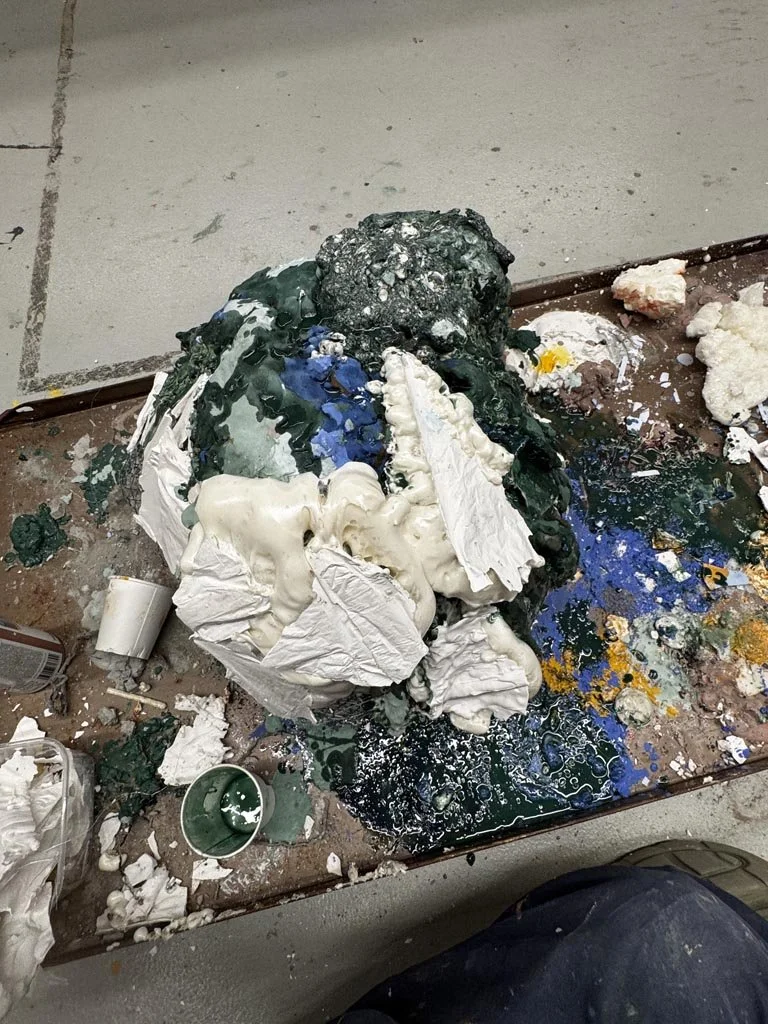
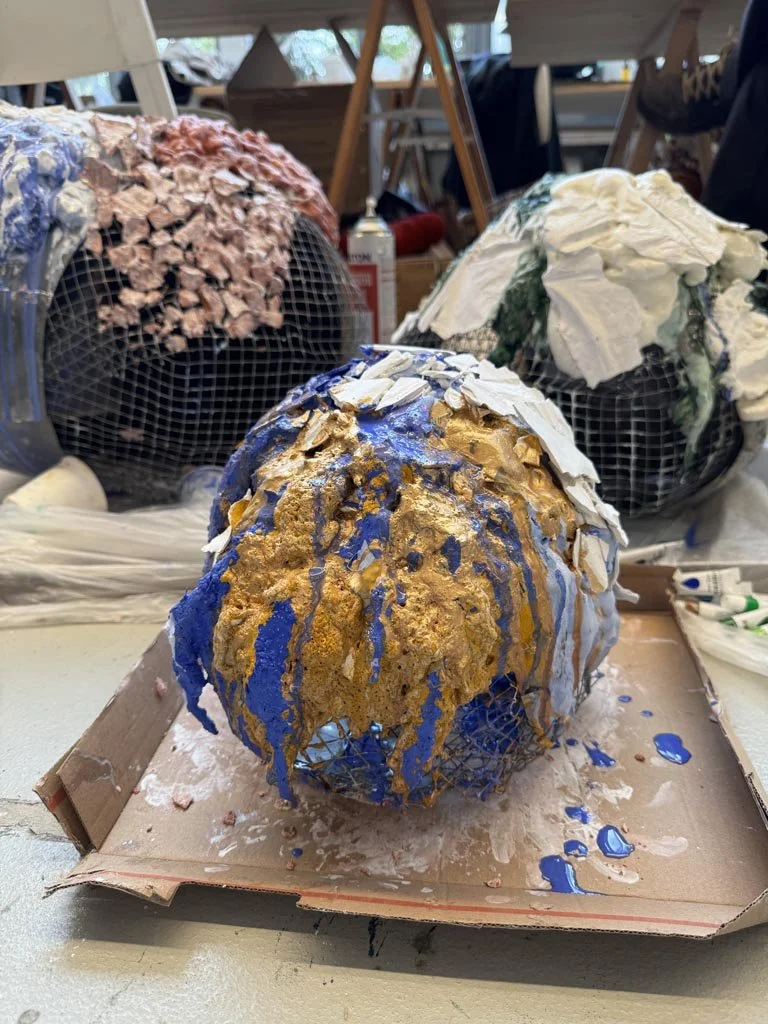
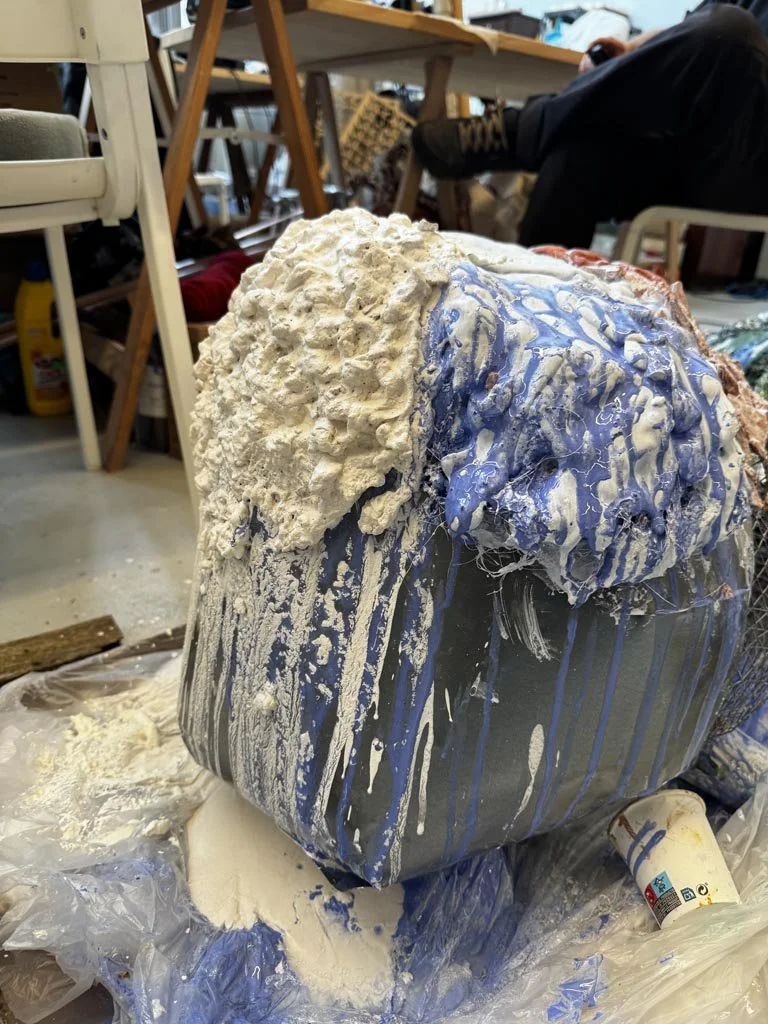
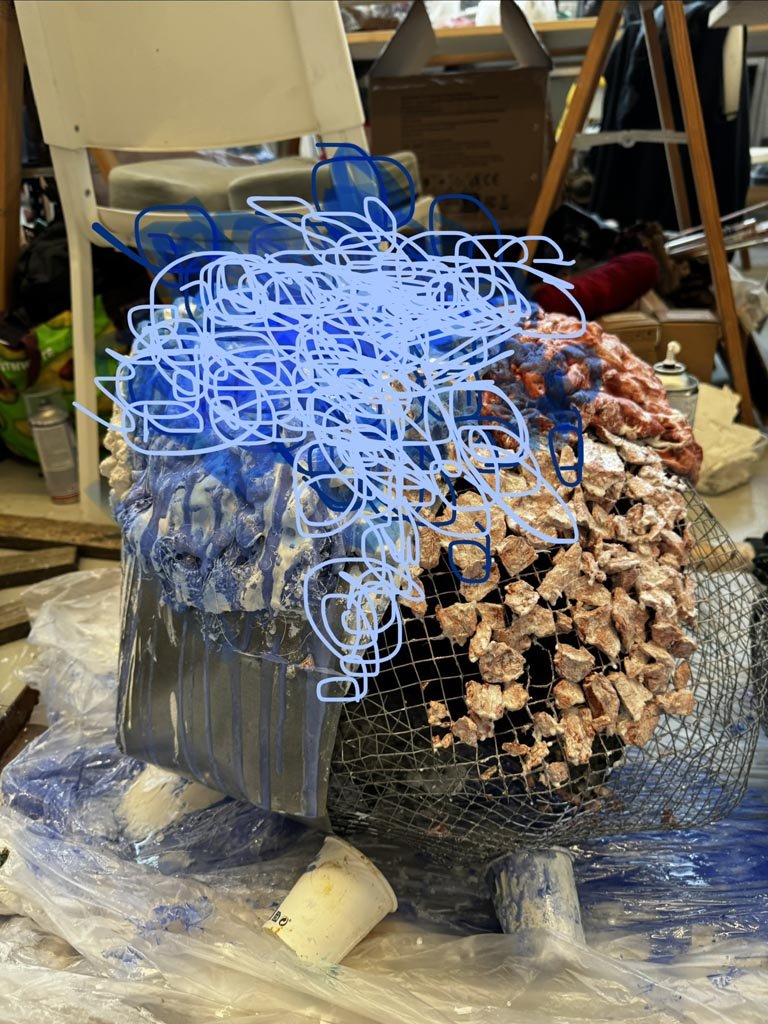
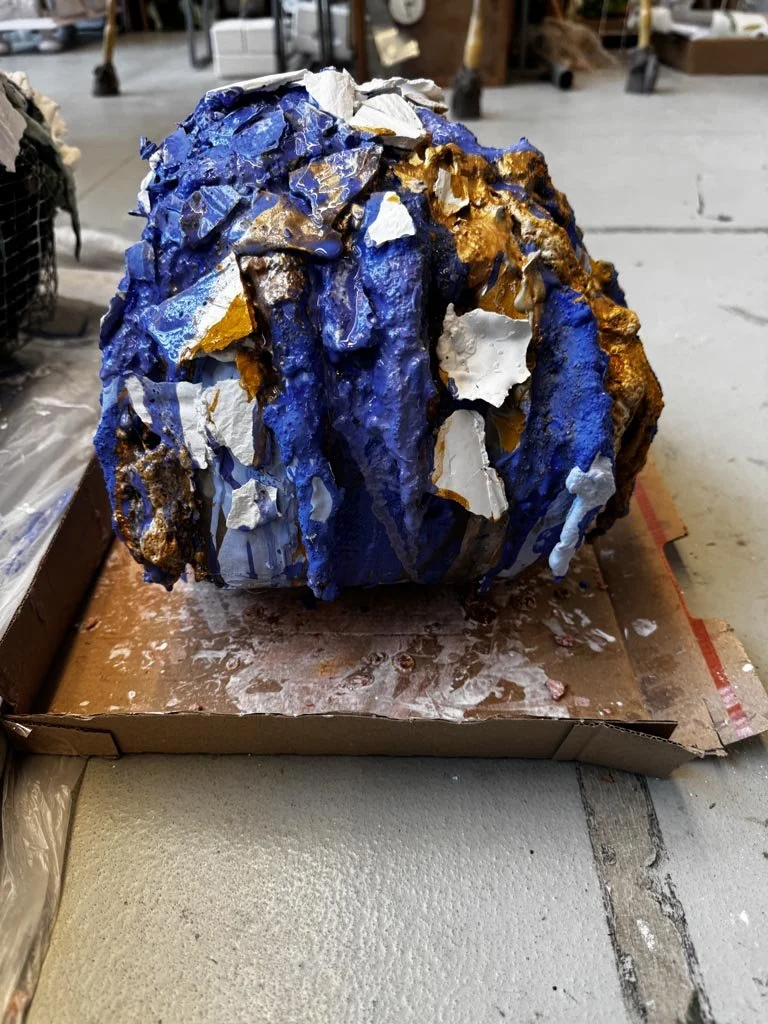
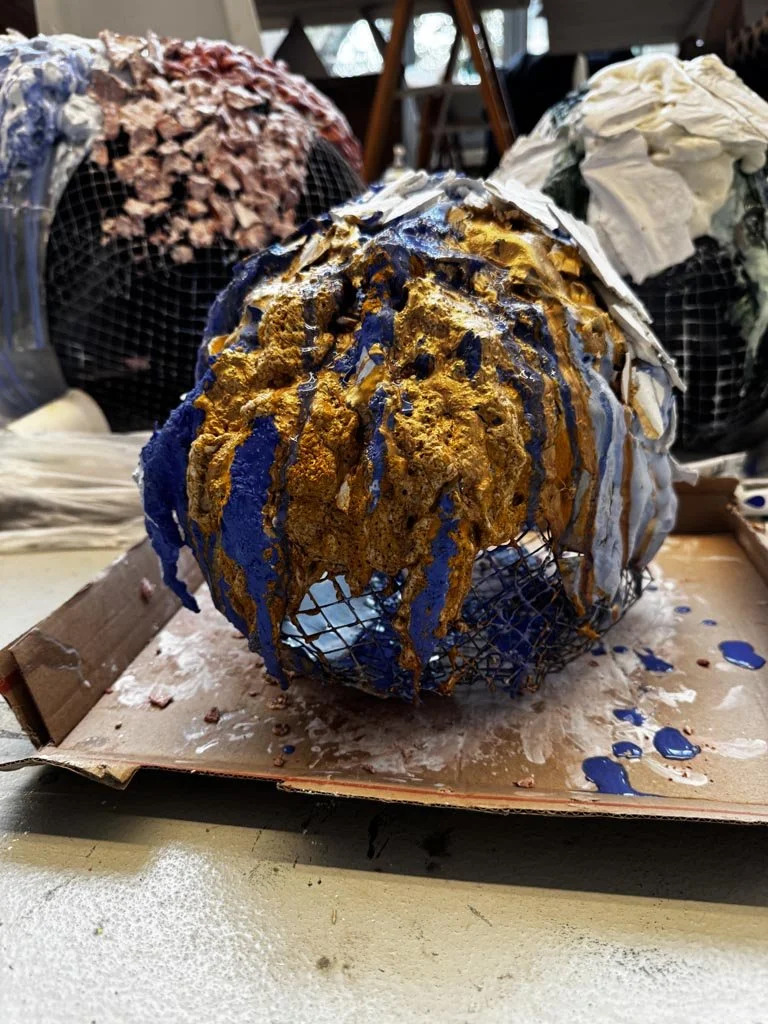
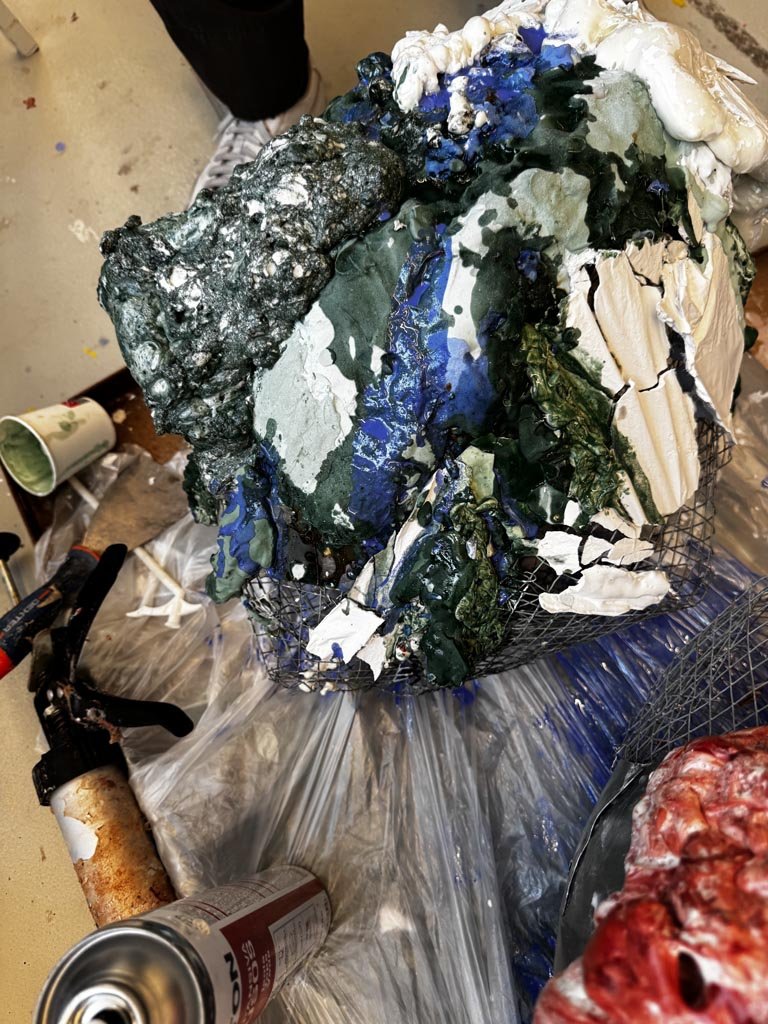
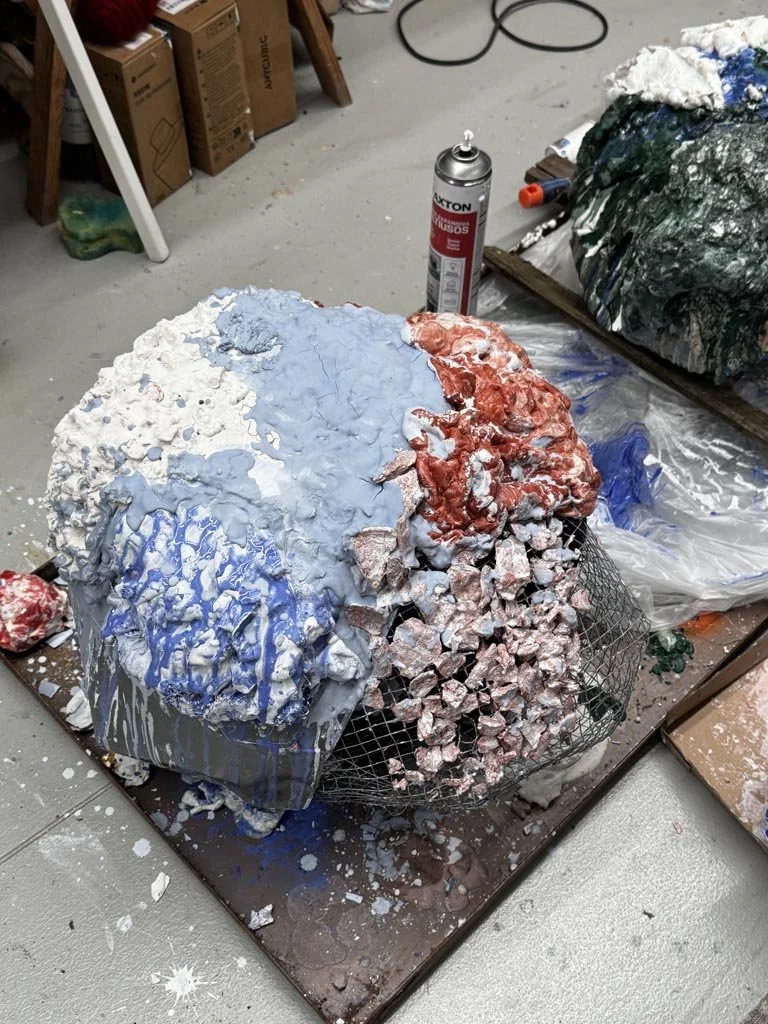
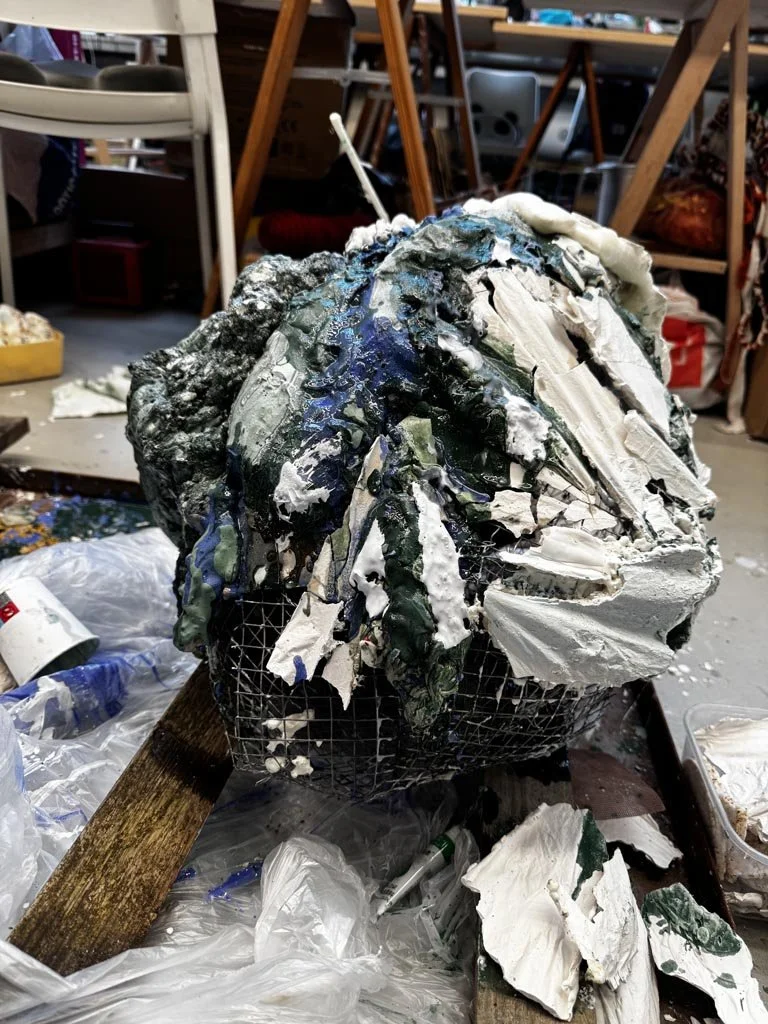
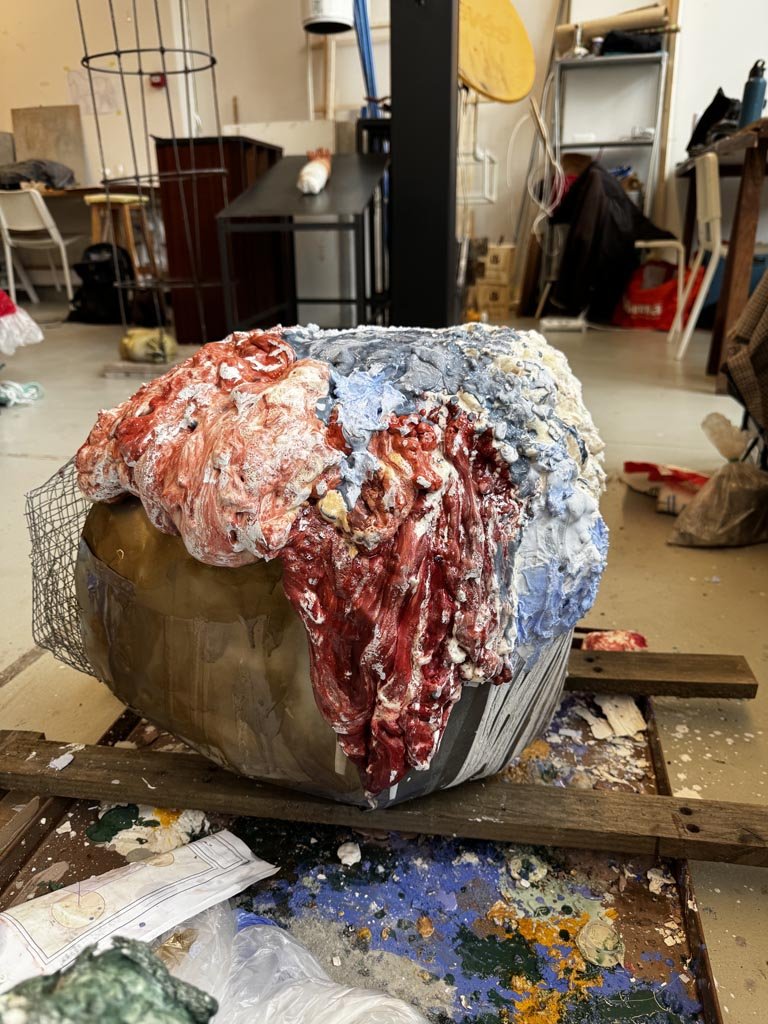
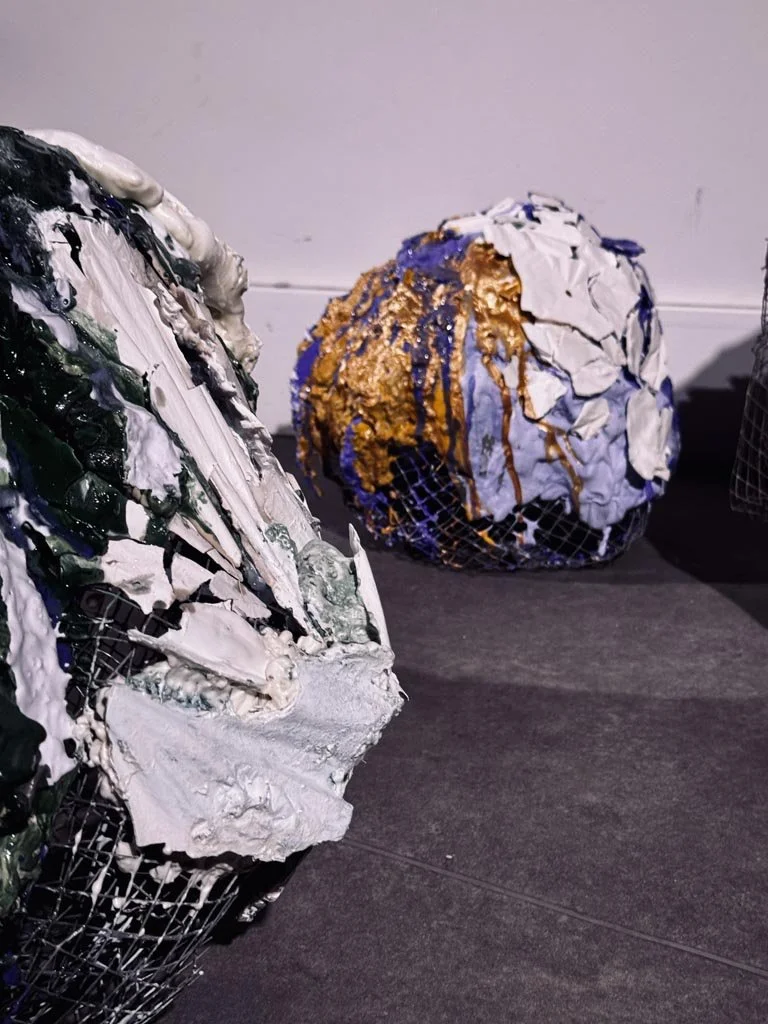
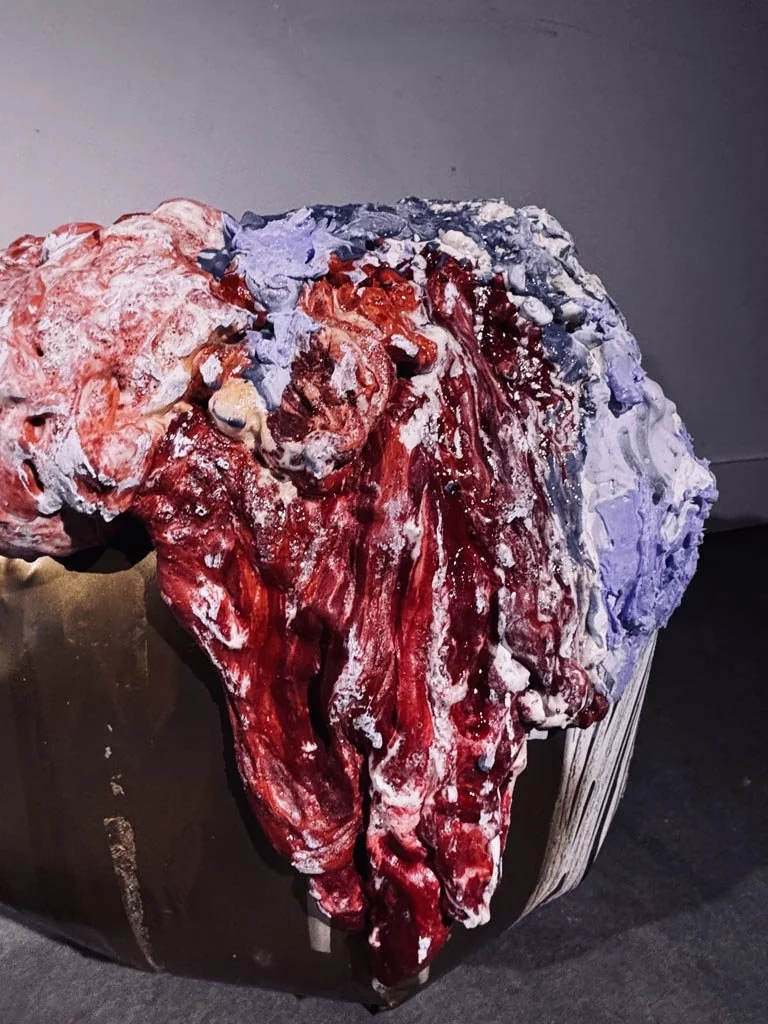
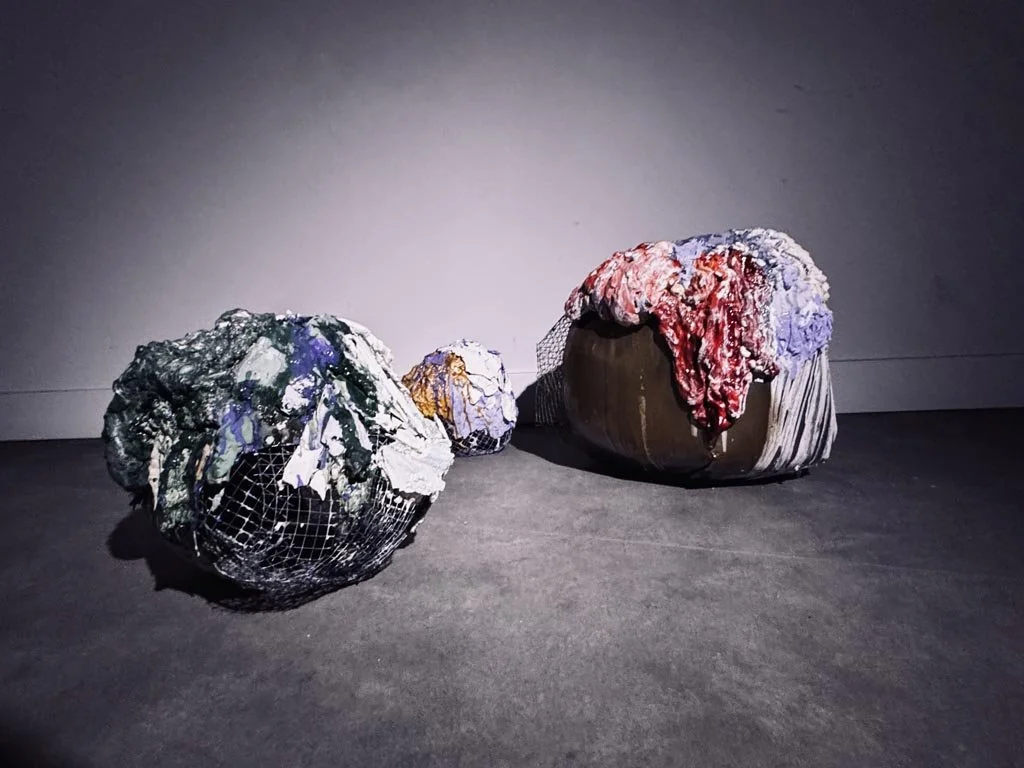
Still Warm examines the accumulated body of the mother and the worker, built upon rather than idealized. Three misshapen orbs reveal surfaces worked through layers of epoxy, resin, concrete, plaster, pigment, and broken material. The skins are excessive, cellular, viral, geological.
The title holds dual meaning: warmth as what caregiving provides without accounting, and "still" as both temporal endurance and resistance past depletion.
The orb is the organizing logic of the work. Stripped of face, orientation, and hierarchy, the sphere offers no single correct reading. But these are not perfect spheres; they are deformed, patched, irregular. The gap between the implied whole form and the ruptured surface that has grown over it is where the work's argument lives. The idealized body and the accumulated reality of inhabiting one are held in the same object.
Since Fragile
Materials: Cerâmica, mármore, aço inoxidável, arame, betão, gesso, silicone, poliuretano, pigmento de óxido de ferro, tinta acrílica com efeito espelhado
A tall totem rising from a concealed metal armature, this work extends the central investigation of my last work Still Warm, where concrete, epoxy, and broken material were layered as residue across steel spheres. Since Fragile expands that accumulation vertically. The stack leans — a mild tilt that functions as the sculpture's anatomical argument. Things built from continuous accumulation bear weight off-center, and they hold.
There is a temporal entry into fragility, built into the work layer by layer in the ceramic and stone forms stacked along the hidden pole: each one a deposit, a surface record, a layer of weight that is also a layer of time.
The work continues a sustained inquiry into what emotional labor leaves on a body when that body has been asked to carry more than it shows. The totem form is chosen intentionally, for its monumentality, its femininity, and for the particular way it conflates endurance with vulnerability. What holds the structure up is invisible. The weight, however, is real and readable in the lean. Since Fragile embodies the question of bearing: tilted, accumulated, fragile, and persistent at once.
4. Research Questions
Overarching Research Question
How can sculpture make visible the invisible economies of feminine labor (the sustained, unaccounted work of caring, holding, and maintaining) and what material and formal strategies best carry that inquiry?
Sub-questions across all of my projects:
What is the relationship between material weight and the experience of emotional burden?
How does scale affect the bodily experience of encountering labor made visible?
Can ephemeral and permanent materials function as opposite expressions of the same underlying condition?
What does it mean for feminist inquiry when the research methodology is the making?
Still Warm:
Within the overarching inquiry, this project investigates feminine labor through accumulation and surface, labor that leaves excess traces, builds up, and does not dissolve.
How can metal armature and mesh be formed into volumetric bodies that support accumulated surface weight while retaining organic irregularity and imply bodies that have been added to, and show it?
• Which joining and bracing techniques allow structural stability without rigidity of form?
• How does mesh tension affect the final silhouette, and can deformation be deliberately introduced at the armature stage?
How does the sequential layering of epoxy, resin, concrete, and aggregate produce surfaces that read as biological rather than constructed, enacting the way labor accumulates on and transforms the body over time?
• What layering sequences and cure intervals produce eruptive, cellular texture?
• At what stage should aggregate be embedded to appear grown-in rather than applied?
How does the contrast between matte concrete and pooling high-gloss resin produce tension between the geological and the biological?
• How does finish variation function as a compositional tool across multiple volumes that must read simultaneously as distinct bodies and as a collective?
What palette relationships across substrates allow each volume to read as individual while belonging to a group?
• How does the finish variation map onto three distinct states of the laboring body (accumulating, eruptive, depleted)?
5. Theoretical Context
Still Warm builds on feminist sculpture's long engagement with the body as material site, in conversation with Lynda Benglis, whose poured and congealed forms collapsed the boundary between making and bodily excess, and Lee Bul, whose grotesque hybrid figures challenge idealized femininity through surface and accumulation. The work engages contemporary discourse around emotional labor and invisible domestic work, particularly the writing of Arlie Hochschild and Sara Ahmed on the affective economies that structure caregiving, asking what it looks like to give that labor physical form: not metaphorically, but materially, as texture, as crust, as weight.
Still Warm is an evolving body of work. The current iteration of three misshapen steel and mesh volumes encrusted with epoxy, resin, concrete, and aggregate is understood as a first generation of forms. Future development will expand the work in scale and material range, introducing ceramics and additional metal fabrication techniques to deepen the investigation into accumulation, surface, and the laboring body. The work grows as the inquiry grows.
6. Process and Documentation
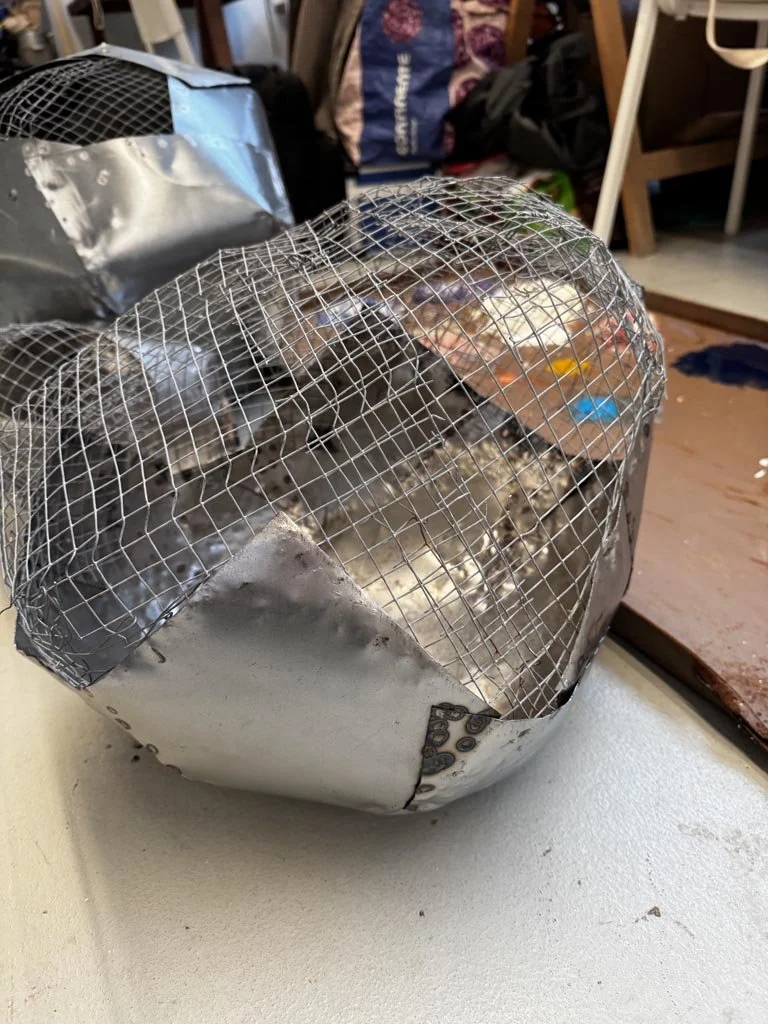
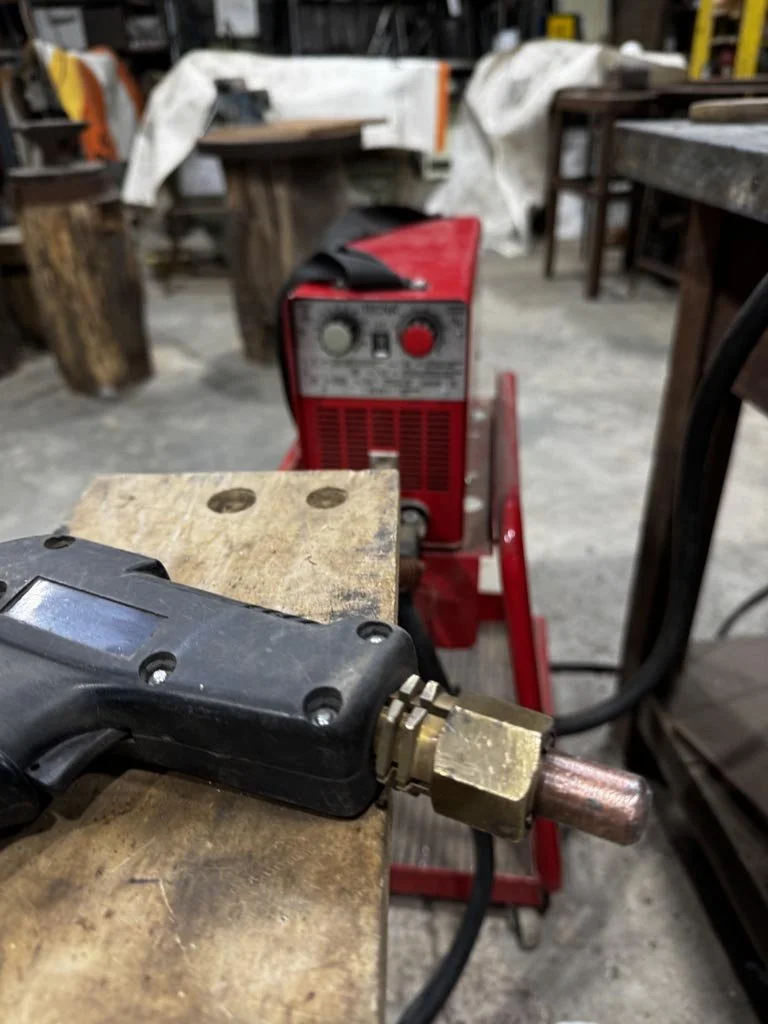
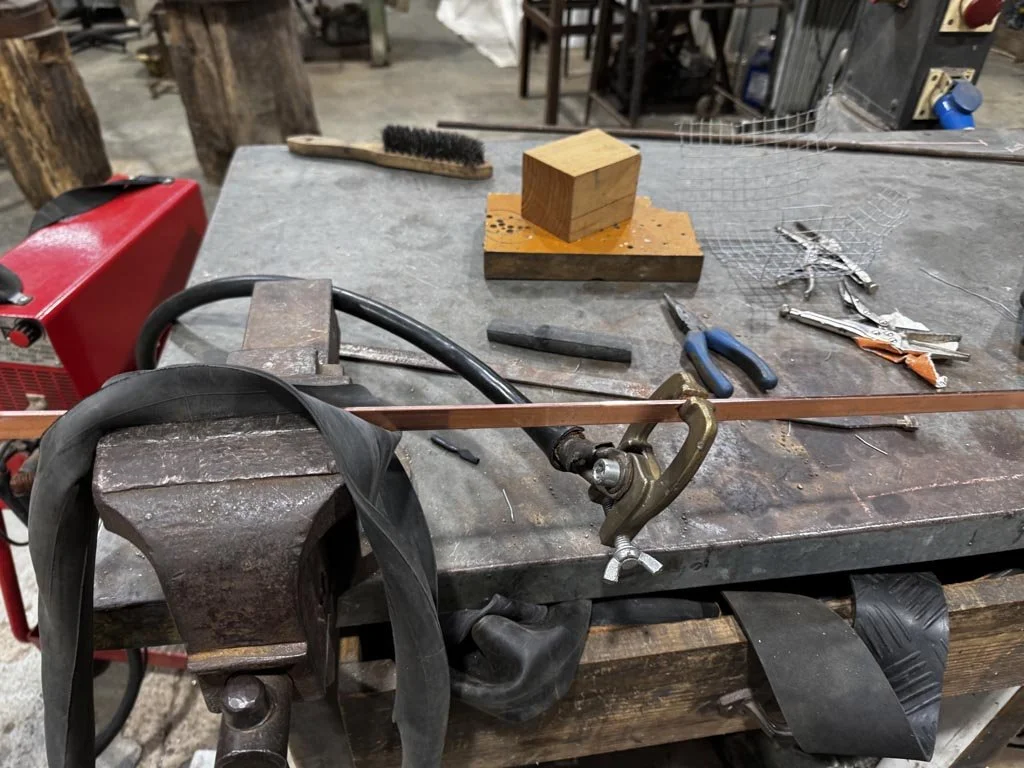
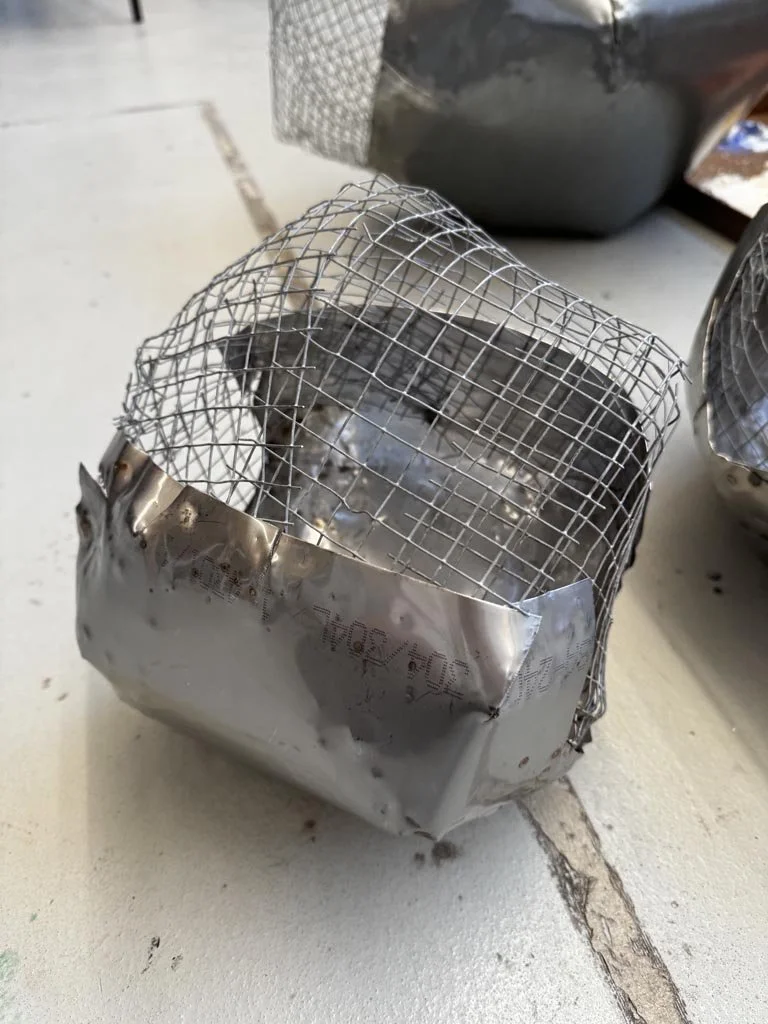
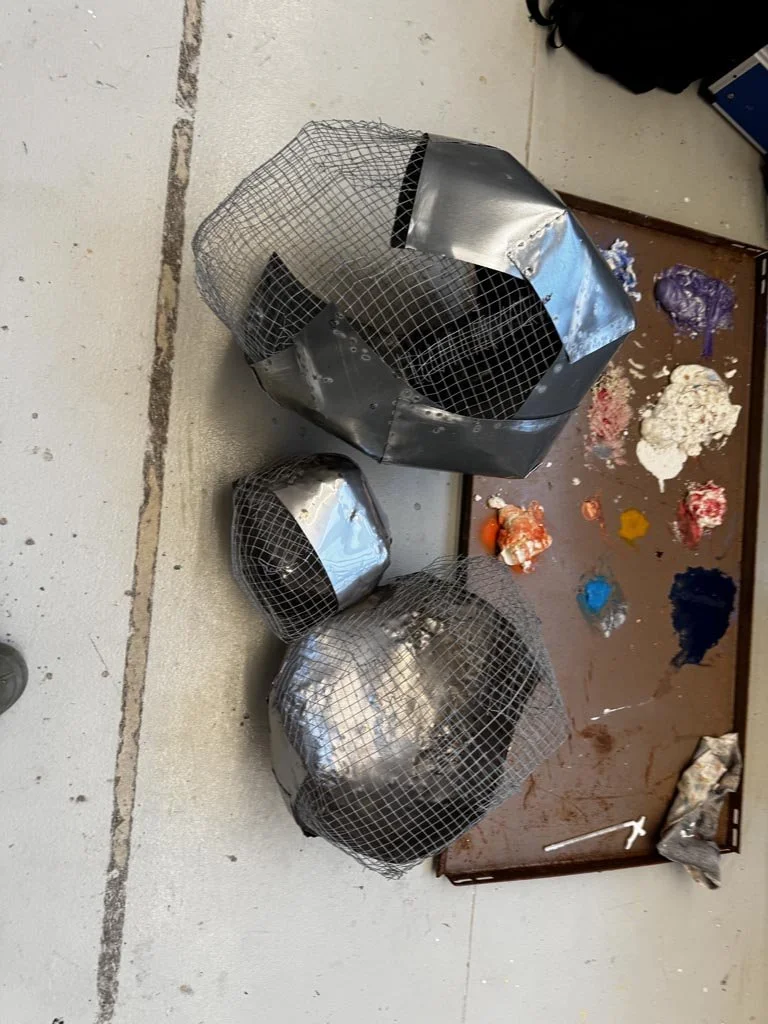
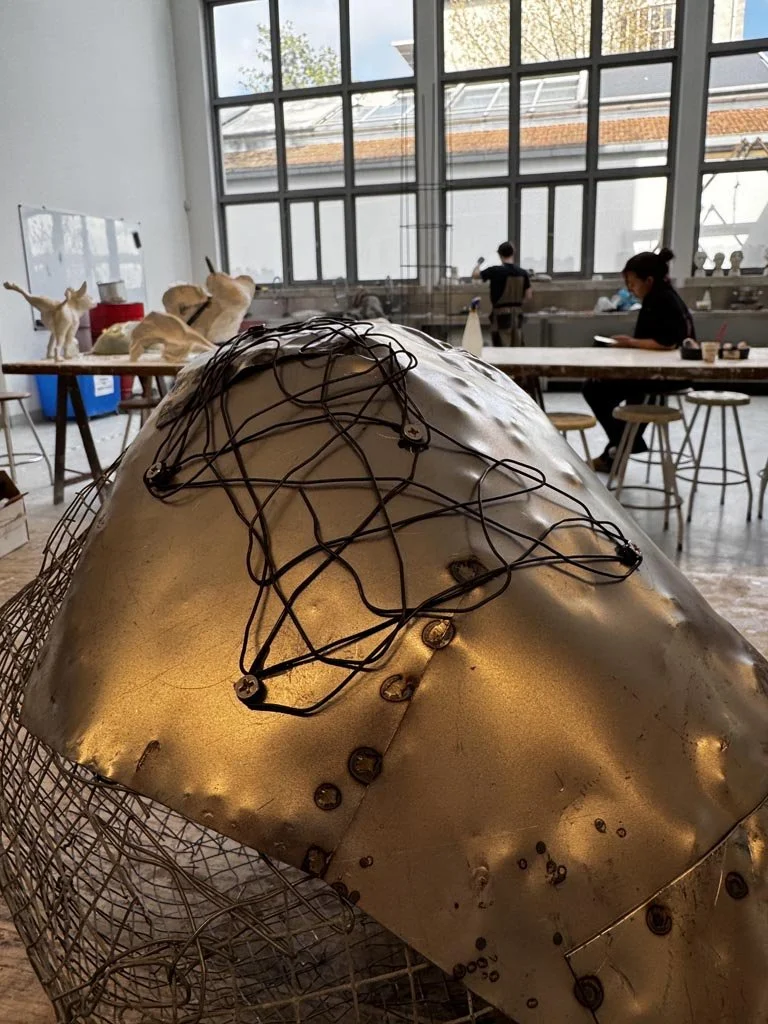
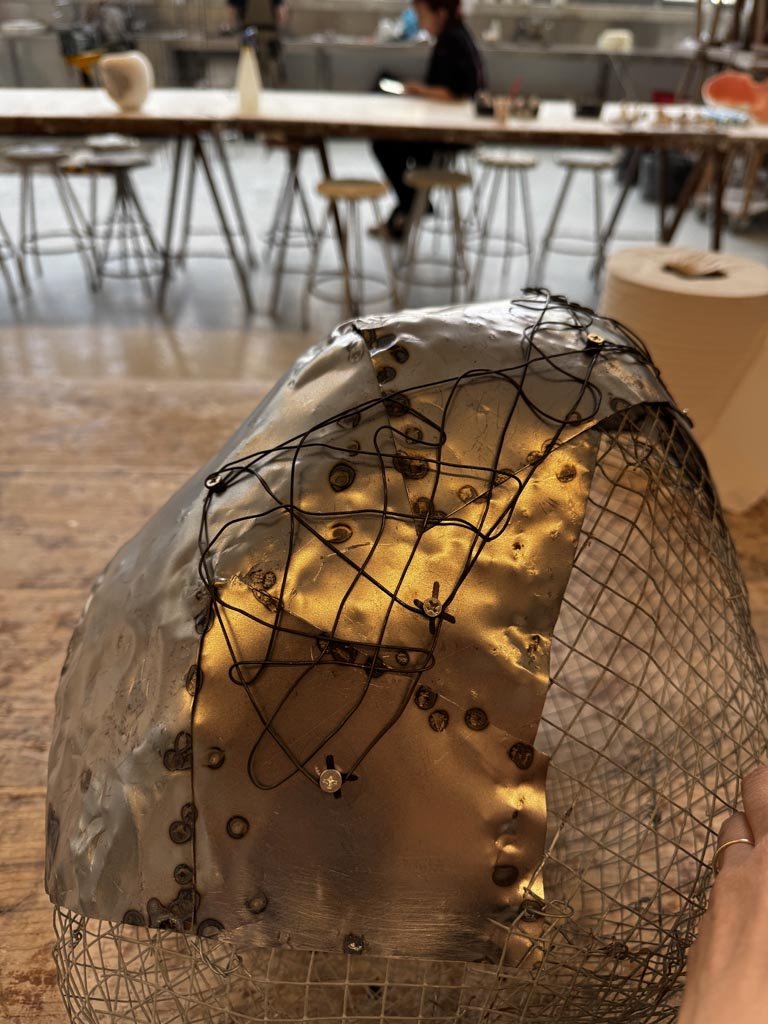
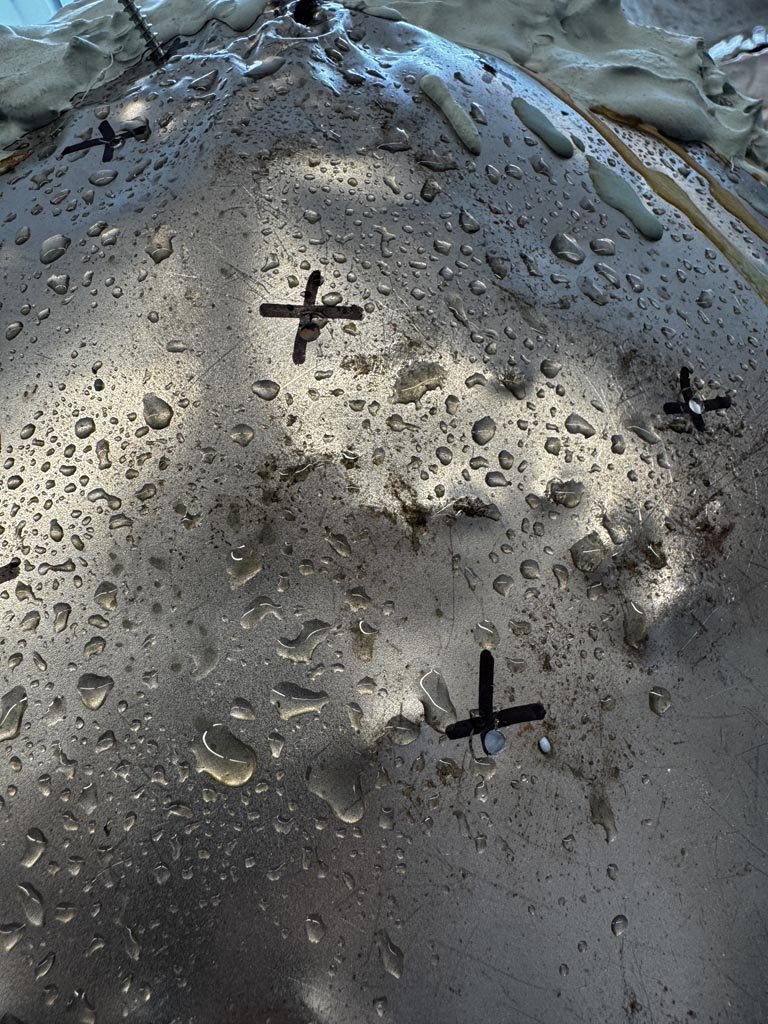
Still Warm is currently in active fabrication. The first phase of the work focused on armature construction: forming and welding galvanized steel, stainless steel, and metal mesh into three volumetric bodies of varying scale. Each form is built to be structurally capable of supporting heavy layered surface treatments while retaining the organic irregularity that is central to the work's argument.
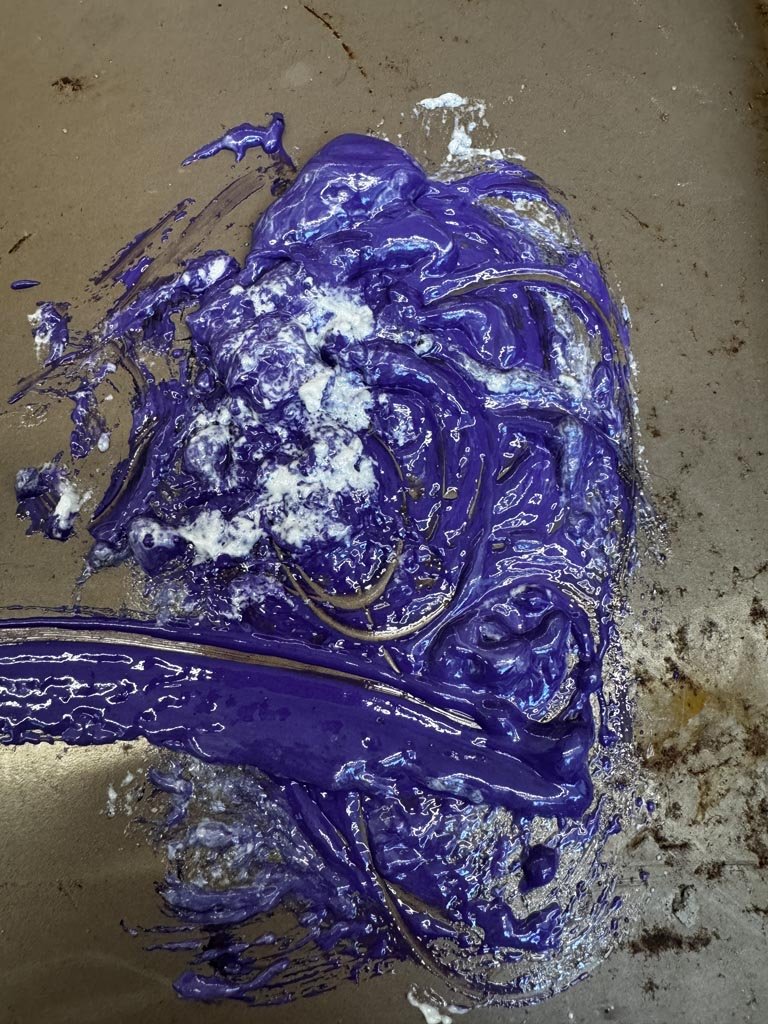
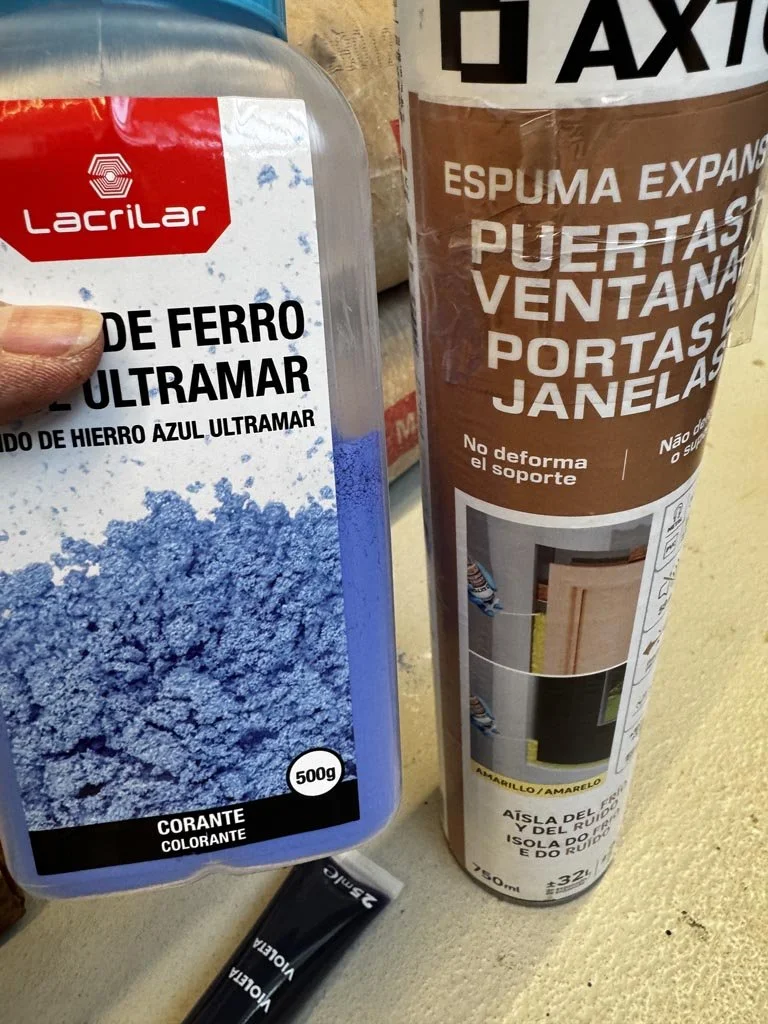
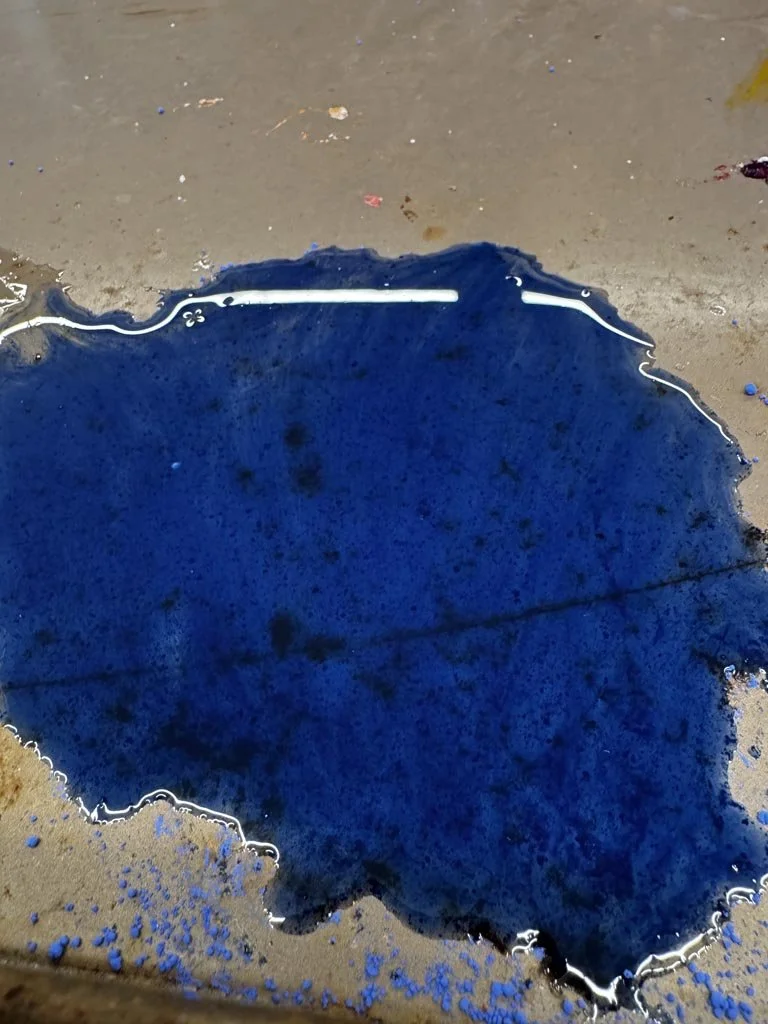
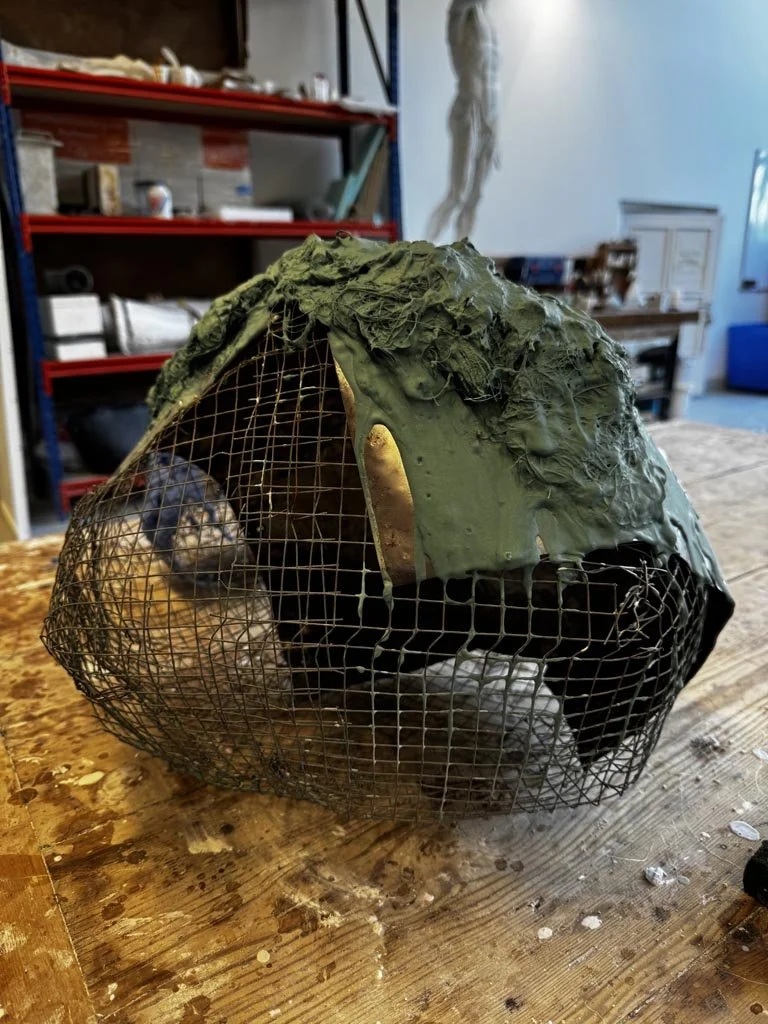
Surface development proceeded through material experimentation: testing layering sequences, cure intervals, and the behavior of embedded aggregate across epoxy, resin, concrete, plaster, and paint. The investigation seeks textures that read as biological and accumulative, as cellular, eruptive, grown rather than applied, with unexpected contrasts between matte concrete and pooling high-gloss resin, producing tension between the geological and the organic.
Color and finish developed across the three volumes as a compositional tool, allowing each body to carry its own material history while functioning as part of a collective. Finish variation maps onto the work's conceptual logic: three bodies, three states, one shared condition.
Documentation of material tests, fabrication process, and surface development is ongoing. Future phases will expand the work into larger scale and introduce ceramics and additional metal fabrication, extending the investigation into how accumulated material can carry the weight of accumulated labor.
7. References
Ahmed, Sara. The Cultural Politics of Emotion. Edinburgh: Edinburgh University Press, 2004.
Benglis, Lynda. Adhesive Products. 1971. Poured latex. Paula Cooper Gallery, New York.
Bul, Lee. Cyborg series. 1997–2011. Mixed media sculptures. Various collections.
Hochschild, Arlie Russell. The Managed Heart: Commercialization of Human Feeling. Berkeley: University of California Press, 1983.
Mendieta, Ana. Silueta Series. 1973–1980. Earth-body works documented in photographs. Estate of Ana Mendieta and Galerie Lelong & Co., New York.
Nakaya, Fujiko. Fog Sculpture #47258 "F.O.G." 1982. Live fog installation. Various exhibitions internationally.
Pak, Sheung Chuen. Breathing in a House. 2006. Installation with video, 6 min. 22 sec. Performed and documented in Busan, Korea. Displayed: Tokyo Photographic Art Museum 2F Exhibition Gallery, February 2–18, 2024.
Pollock, Griselda. After-affects/After-images: Trauma and Aesthetic Transformation in the Virtual Feminist Museum. Manchester: Manchester University Press, 2013.